
Chefchaouen Travel Guide 2026: Blue City Tips, Sights & Where to Stay
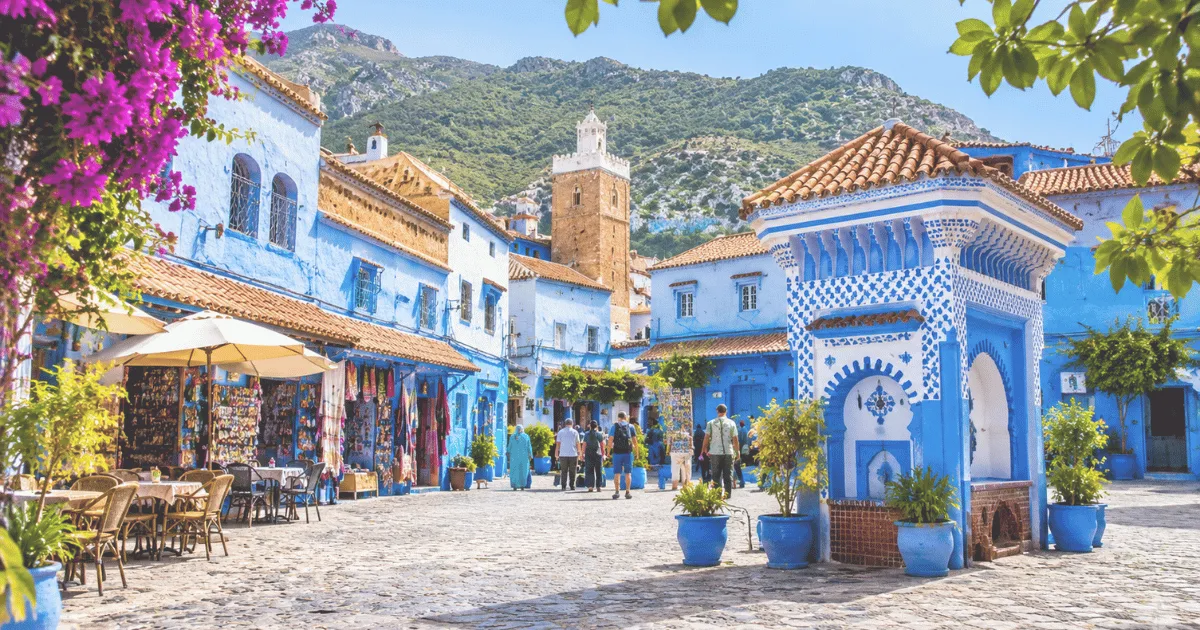
Chefchaouen travel guide in brief: Chefchaouen, or Chaouen, is a small blue-washed town in the Rif Mountains of northern Morocco. Spend one or two nights (three if you want to hike to the Akchour waterfalls), stay in a riad inside the car-free medina near Bab el-Ain or Plaza Uta el-Hammam, explore early in the morning before the day-trippers arrive, and visit in spring or early autumn. There is no train or airport: most travelers arrive by CTM bus from Fes (about 4 hours) or Tangier (about 2.5–3 hours).
Affiliate disclosure: Some links in this guide are affiliate links. We may earn a commission if you book through them, at no extra cost to you. This never changes what we recommend.
Chefchaouen is the calm stop on most Morocco itineraries: smaller, slower and greener than Fes or Marrakech, with mountain air and far less hassle. This Chefchaouen travel guide covers what a first visit really needs: how to get there, how long to stay, the sights with prices, where to sleep, what to eat, the day-trip to Akchour, honest safety notes and a cost breakdown. It is part of our Morocco travel guide.
Chefchaouen at a Glance
- Where: Rif Mountains, northern Morocco, at about 600 m altitude
- Founded: 1471, as a fortress against the Portuguese (Wikipedia)
- Population: 46,168 (2024 census)
- How long: 1–2 nights; 3 with a hiking day
- Getting there: bus or grand taxi; no train station or airport
- Best time: April–June and September–October
- Main costs: Kasbah 60 MAD, tagine 60–80 MAD, budget riad 250–400 MAD a night
- Languages: Darija and Spanish are widely spoken; French and some English in tourist businesses
Chefchaouen Map
The map shows the medina, the main viewpoints and the bus station covered in this Chefchaouen travel guide. Tap a pin for details, or open it in Google Maps.
Blue = medina, green = viewpoints and nature, grey = transport. Akchour is off the default view: zoom out to see it. Pins are approximate.
Why Is Chefchaouen Blue?
Nobody agrees, and that is part of the charm. According to Wikipedia, the most common explanations are that blue keeps mosquitoes away, that it symbolizes the sky and a spiritual life, and, as some locals say, that the walls were painted blue in the 1970s to attract tourists. Other accounts link the colour to the Jewish community that settled in the town. What is certain is that residents still repaint the walls regularly, which is why the blue looks so fresh.
The town itself is much older than the paint. It was founded in 1471 by Ali ibn Rashid al-Alami as a kasbah against Portuguese raids, and it later received Andalusian Muslims and Jews expelled from Spain, which explains the whitewashed houses, tiled roofs and Andalusian feel. Spain occupied the town from 1920 to 1956, with a break in 1924–1926 when it belonged to Abd el-Krim’s Rif Republic.
Chefchaouen Travel Guide: How to Get There
Every route in this Chefchaouen travel guide ends by road, because Chefchaouen has no train station. The usual route is Fes → Chefchaouen → Tangier, or the reverse.
| From | By bus | By grand taxi / car | Notes |
|---|---|---|---|
| Fes | About 4 hours, 75 MAD on CTM (Third Eye Traveller) | About 3.5 hours | CTM runs several departures a day |
| Tangier | About 2.5–3 hours, 70–90 MAD on CTM (Kiwi.com) | Shared taxi 120–150 MAD per seat | Taxis leave when full; you may change in Tetouan |
| Tetouan | About 1.5 hours | About 1.5 hours | Closest city; small airport (Sania Ramel) |
| Casablanca / Rabat | About 9 / 5 hours | Long drive | Better to break the trip in Fes or take the train to Tangier first |
Times and prices from Third Eye Traveller (CTM from Fes, December 2024), Kiwi.com’s 2025 Chefchaouen guide and Malika in Morocco. Buy CTM tickets a day ahead in high season, and expect to pay a few dirhams extra for luggage.
Getting Around Chefchaouen
Chefchaouen is best explored on foot. The blue medina is compact but steep, with narrow lanes and stone steps that are not accessible to cars. Petit taxis can take you between the bus station, the new town and the medina gates, but you will need to walk to your riad or hotel. Wear comfortable shoes with good grip, and ask your accommodation which gate is easiest to reach with luggage.
The bus station is below the old town. A petit taxi to Bab el-Ain costs 10–20 MAD, according to Kiwi.com; the walk up takes about 20 minutes, and it is steep with a suitcase. Flying in? The nearest major airports are Tangier and Fes; compare routes before you book.
Compare flights to Tangier and Fes on Aviasales →
Arriving from Spain? Our Tangier travel guide covers the ferry from Tarifa and the onward buses.
How Many Days in Chefchaouen?
| Time | What you can do | Best for |
|---|---|---|
| Day trip | The medina, the Kasbah and a quick viewpoint | Travelers short on time (but you miss the quiet mornings and evenings) |
| 1 night | Medina, Kasbah, sunset at the Spanish Mosque and an empty early morning | Most itineraries |
| 2 nights | All of the above plus Ras El Maa, the hills and a slow day | The ideal stay |
| 3 nights | Add a full day at Akchour or in Talassemtane National Park | Hikers |
Our view in this Chefchaouen travel guide: a day trip from Fes means about eight hours on the road for a few hours in town, so stay at least one night. The best part of Chefchaouen is the early morning, when the blue lanes are empty. For a timed plan, follow our 2 days in Chefchaouen itinerary.
Best Things to Do in Chefchaouen
These are the sights this Chefchaouen travel guide recommends for a first visit, roughly in walking order.
Wander the blue medina
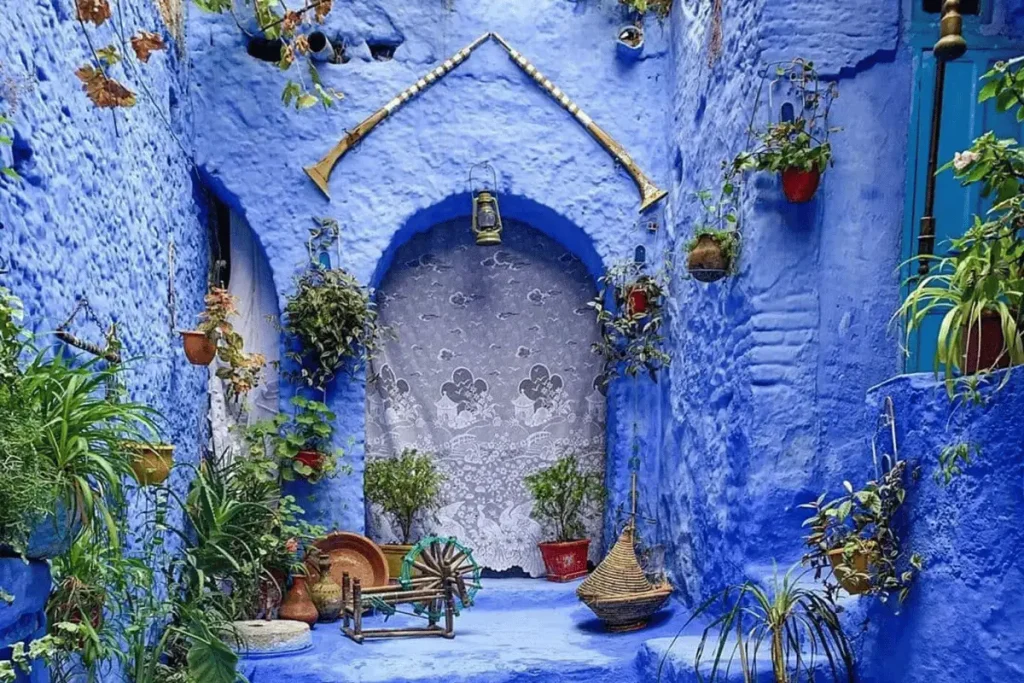
The medina is small, safe and easy to walk, but it is steep. Get up early: tour groups start arriving around 10:00, according to Third Eye Traveller. The upper lanes towards Ras El Maa and the quarter around Plaza El Haouta are the most photogenic.
Visit the Kasbah
The 15th-century Kasbah on Plaza Uta el-Hammam has a small ethnographic museum, an Andalusian garden and a tower with a view over the rooftops. Entry is 60 MAD for visitors (Kiwi.com and Third Eye Traveller). Indicative hours are 9:00–13:00 and 15:00–18:00, according to Avygeo; check locally, as hours change.
Watch the sunset from the Spanish Mosque
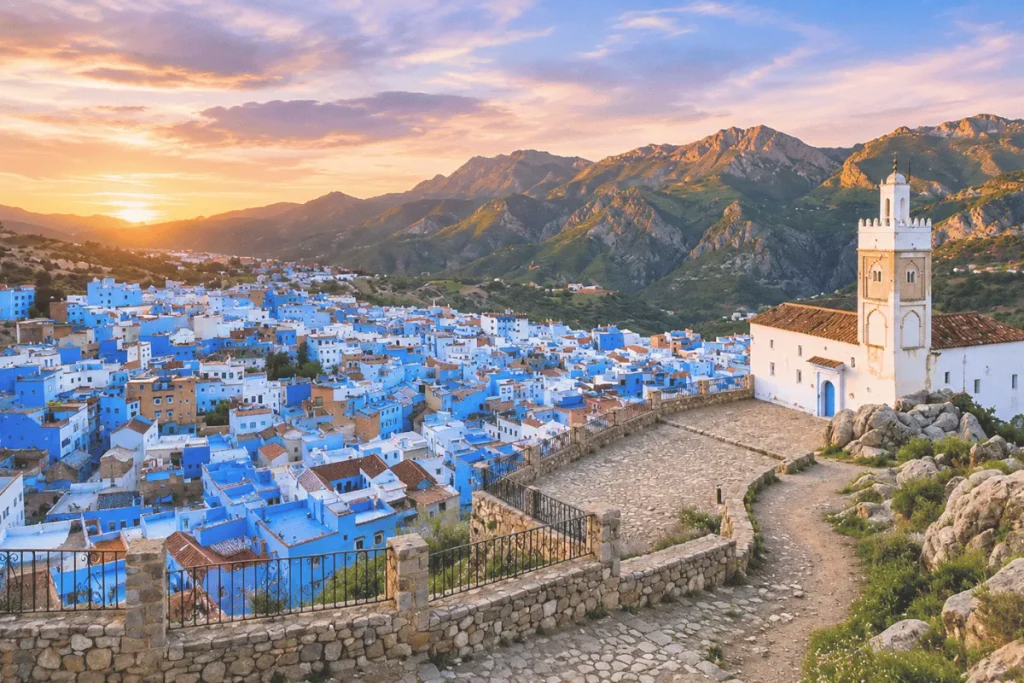
The Spanish Mosque was built in the 1920s on the hill east of town. It is no longer used for prayer, but the viewpoint is free and gives the classic view over the whole blue town. The walk takes 20–30 minutes from Ras El Maa; leave about an hour before sunset.
Ras El Maa
This spring just outside the eastern wall was the town’s original water source. Women still wash clothes in the stream, so ask before taking photos of people. There are small cafés and fresh orange juice for about 10 MAD.
Plaza Uta el-Hammam and the Grand Mosque
The main square is lined with café terraces facing the Kasbah and the octagonal minaret of the 15th-century Grand Mosque. Non-Muslims cannot enter the mosque.
Hike to the Akchour waterfalls
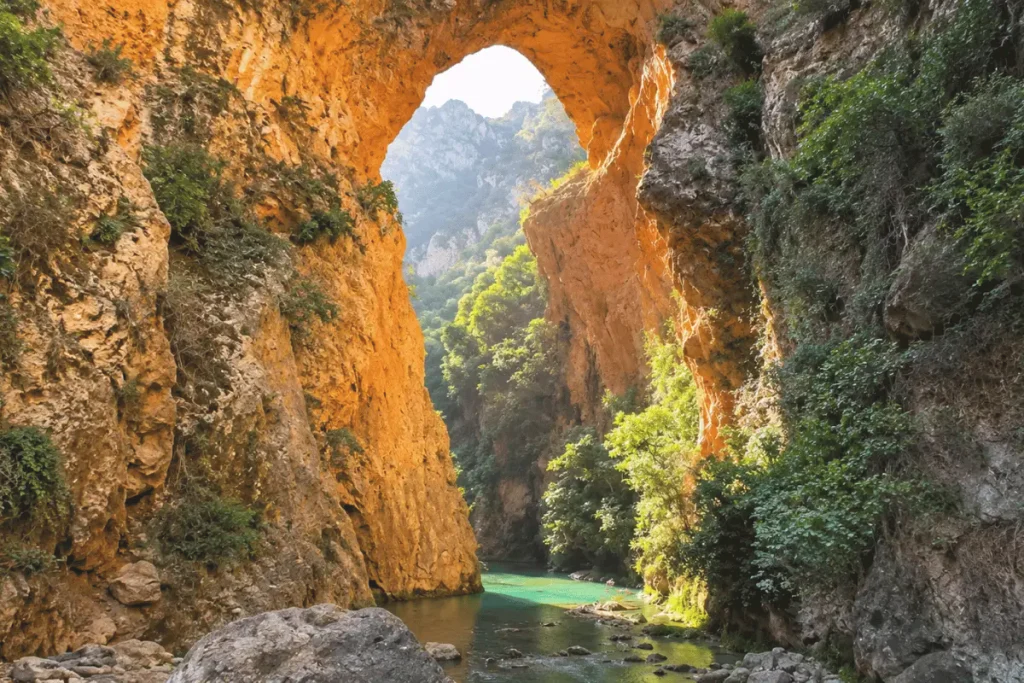
Akchour is 30–45 minutes from town, at the edge of Talassemtane National Park. One trail leads to God’s Bridge, a natural rock arch over the river, and a longer one to the main waterfall. A shared taxi costs about 40–50 MAD per person (Kiwi.com), and a private guided hike takes about seven hours. Go on a weekday: weekends get busy, and the trails are slippery after rain.
Browse Chefchaouen tours and Akchour hikes on Klook →
For prices, opening hours and a map of every sight, see our list of the best things to do in Chefchaouen.
Where to Stay in Chefchaouen
The medina is car-free, so taxis drop you at a gate and you walk the rest with your luggage. Every stay recommended in this Chefchaouen travel guide assumes you will carry your bag from the nearest gate, so that is the most important factor.
| Area | Pros | Cons | Best for |
|---|---|---|---|
| Near Bab el-Ain / lower medina | Closest to taxis, flatter, easy to find | Less atmospheric at night | Heavy luggage, short stays |
| Around Plaza Uta el-Hammam | In the middle of everything | Can be noisy, some stairs | First-timers |
| Upper medina towards Ras El Maa | Quiet, best views and photos | Steep climbs | Couples, photographers |
| Outside the medina | Parking, larger hotels and pools | You walk or taxi in | Drivers, families |
Expect about 100–150 MAD for a hostel bed and 250–400 MAD for a simple riad room, according to Kiwi.com; boutique riads cost much more. Look for a rooftop terrace, heating in winter and clear directions from the nearest gate. Popular medina stays mentioned by Third Eye Traveller include Lina Ryad & Spa, Casa Perleta and Dar Baibou.
Compare riads and hotels in Chefchaouen on Klook →
For named riads and hotels in each area, see where to stay in Chefchaouen.
Best Time to Visit Chefchaouen
| Season | Avg high / low | Rain | What to expect |
|---|---|---|---|
| Spring (Mar–May) | 16–21°C / 7–11°C | Wet March–April | Green hills, waterfalls at their best |
| Summer (Jun–Aug) | 27–31°C / 15–19°C | Almost none | Warm and dry, busiest; swim at Akchour |
| Autumn (Sep–Nov) | 16–26°C / 8–16°C | Rain from October | September is excellent |
| Winter (Dec–Feb) | 13–14°C / 5–6°C | Wettest | Cold nights and quiet, cheap stays; pack layers |
Averages for 1991–2021 from Climate-Data.org. November and December are the wettest months (about 117 mm), July the driest (3 mm).
This Chefchaouen travel guide recommends April–June and September–October: warm days, cool evenings and dry enough for hiking. In winter, choose a riad with heating; many old houses are cold inside.
What to Eat in Chefchaouen
Chefchaouen is the Moroccan emblematic community of the Mediterranean Diet, which UNESCO added to its Intangible Cultural Heritage list with Morocco among the original countries. If this Chefchaouen travel guide gives one food tip, it is to try the local goat cheese. Look for:
- Jben (fresh goat cheese) from the Rif, often sold by women in the street with bread and honey (10–15 MAD)
- Tagines such as goat, chicken or kefta (60–80 MAD in restaurants)
- Bissara (fava bean soup), a cheap breakfast in winter
- Msemen and sfenj (flatbread and doughnuts) for breakfast (3–10 MAD)
- Mint tea on a rooftop (15–20 MAD)
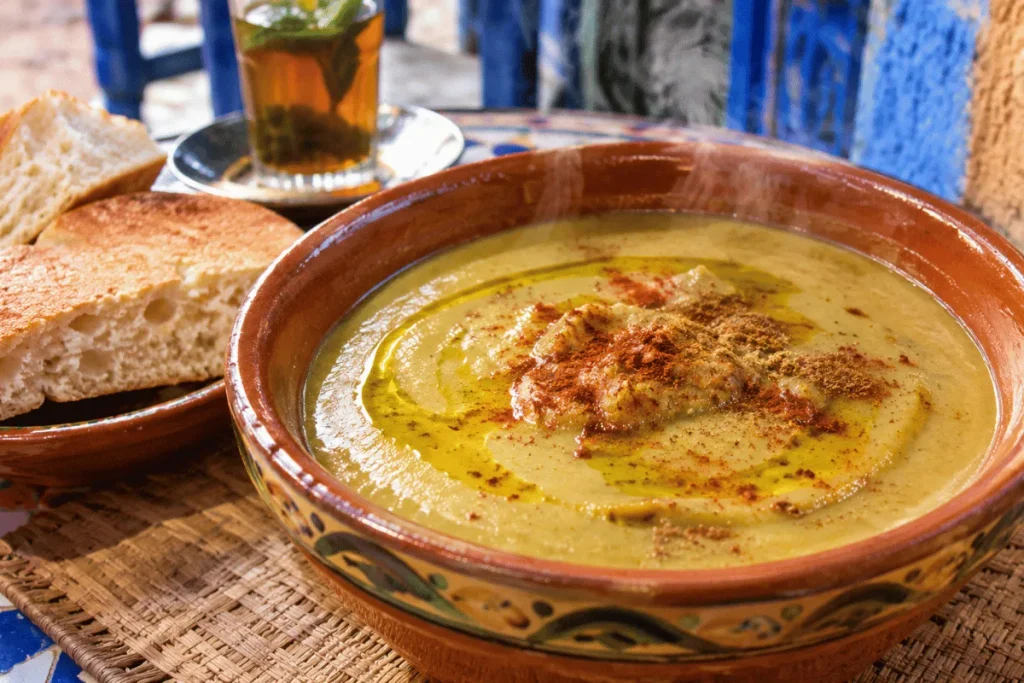
Prices are from Kiwi.com. For sit-down meals, Journey Beyond Travel recommends Casa Hassan for fire-cooked tagines and a terrace view, and Lala Mesouda for home-style cooking, including Friday couscous.
How Much Does Chefchaouen Cost?
| Item | Budget | Mid-range |
|---|---|---|
| Accommodation (per room) | 100–150 MAD (hostel bed) | 250–400 MAD+ (riad) |
| Food (per day) | 80–120 MAD | 200–300 MAD |
| Sights | Medina, viewpoints, Ras El Maa: free | Kasbah 60 MAD |
| Transport | Petit taxi 10–20 MAD | Akchour shared taxi 40–50 MAD |
| Total per person per day | About 250–350 MAD | About 500–800 MAD |
The totals in this Chefchaouen travel guide are our estimates, built from the prices above. Chefchaouen is one of the cheapest stops in Morocco. Bring cash: small shops, cafés and many riads do not take cards, and ATMs are concentrated in the newer town just outside the medina.
Is Chefchaouen Safe?
Chefchaouen is one of the most relaxed towns in Morocco, with very little of the pressure you get in the big medinas. The main annoyance is people offering kif (cannabis). Morocco legalized cannabis in 2021 for medical and industrial use only; buying or smoking it as a tourist is still illegal, so politely decline. Women travelers generally report feeling comfortable, including in the evening, but as everywhere, avoid empty paths outside town after dark.
Chefchaouen Travel Guide: Practical Tips
- Go early. The best light and empty lanes come before 9:00.
- Respect residents. These are people’s homes: don’t sit on doorsteps, block doors or photograph people without asking. Some popular photo spots ask for a small tip.
- Pack good shoes. The streets are steep, polished and slippery after rain.
- Dress modestly. This is a conservative mountain town.
- Book the CTM ahead in summer and around holidays.
- Get mobile data for offline maps; the lanes look alike.
Get a Morocco eSIM on Airalo →
Where to Go Next
If you are using this Chefchaouen travel guide as part of a longer trip, note that most travelers combine Chefchaouen with Fes (about 4 hours south) and Tangier (about 2.5–3 hours north). Read our Fes travel guide and Tangier travel guide for the next stop, the Marrakech travel guide if you are heading south, and our ranking of the best cities to visit in Morocco to plan the route.
Chefchaouen Travel Guide: FAQs
Is Chefchaouen worth visiting?
Yes. It is small, photogenic, relaxed and cheap, with mountain hiking nearby. It is a good contrast to the busy medinas of Fes and Marrakech, especially for one or two nights.
How many days do you need in Chefchaouen?
One or two nights. One night covers the medina, the Kasbah and the Spanish Mosque sunset; two nights lets you slow down, and a third adds the Akchour waterfalls.
How do I get from Fes to Chefchaouen?
Take a CTM bus (about 4 hours, around 75 MAD) or a private transfer or grand taxi (about 3.5 hours). There is no train.
Can you do Chefchaouen as a day trip from Fes?
You can, but it means about eight hours on the road for a few hours in town. If you can, stay at least one night.
Why is Chefchaouen painted blue?
There is no single answer: theories include keeping mosquitoes away, a symbol of the sky and spirituality, Jewish tradition, and a 1970s push to attract tourists.
Is this Chefchaouen travel guide up to date?
Yes. This Chefchaouen travel guide was last updated in October 2026. Prices, bus schedules and opening hours change often, especially during Ramadan, so confirm them locally.
Plan the Rest of Your Trip
Use this Chefchaouen travel guide alongside our other Morocco guides: