
Best Places to Visit in Morocco (2026 Guide)
Affiliate disclosure: Some links in this guide are affiliate links. If you book through them we may earn a small commission at no extra cost to you. Affiliate relationships do not affect the information or planning guidance in this article.
Morocco packs medieval medinas, Atlantic beaches, snow-capped mountains and the Sahara into one country you can cross by train, car and 4×4 in two weeks. The hard part is not finding things to do. It is choosing where to spend your limited days, because distances are bigger than most first-time visitors expect.
This guide covers the best places to visit in Morocco, how many days each deserves, how long it takes to get between them, and three practical routes for 7, 10 and 14 days.
Planning your flights: Compare flights to Morocco
Quick Answer: The Best Places to Visit in Morocco
- Marrakech: a popular first stop for culture, food and easy day trips.
- Fes (Fez): historic medina streets, crafts and traditional culture.
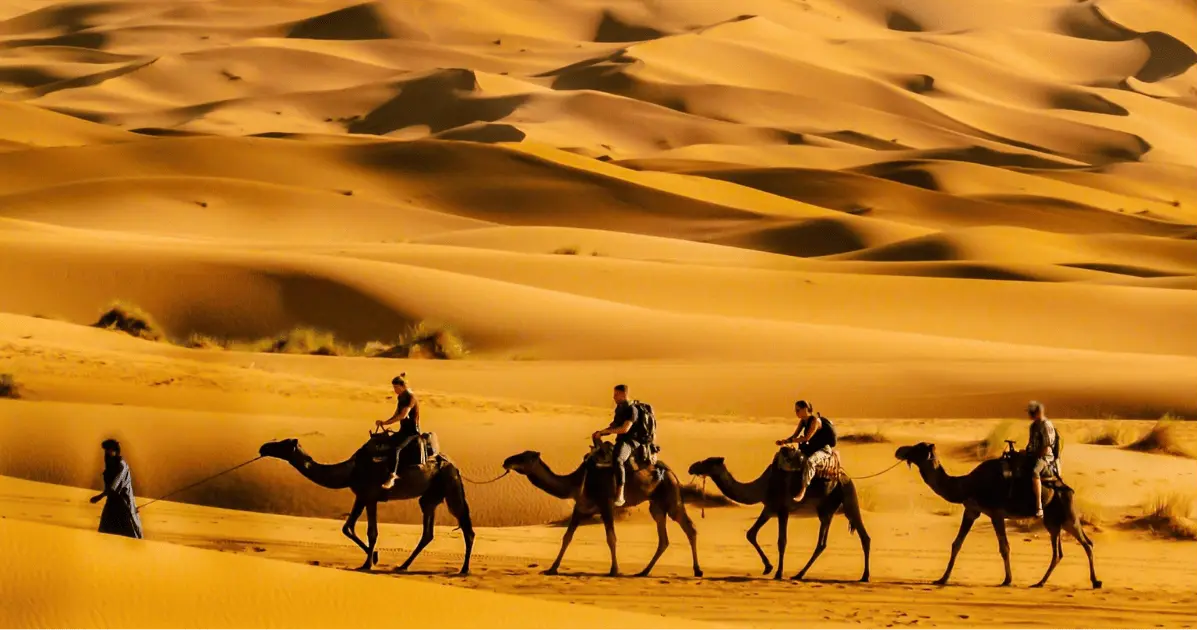
- Merzouga & the Sahara: a classic desert experience around the dunes of Erg Chebbi.
- Chefchaouen: the “blue city” in the Rif Mountains, known for slow wandering, scenery and photography.
- Essaouira: a walled Atlantic port with seafood, beaches and a relaxed atmosphere.
- Aït Ben Haddou (Ait Benhaddou): one of Morocco’s best-known kasbah settlements, on the road to the desert.
Short on time? Do Marrakech → Aït Ben Haddou → Sahara → Marrakech in 7 days.
Best Places to Visit in Morocco at a Glance
Quick Comparison Table
| Destination | Best For | Recommended Stay | Travel Style | Top Experience to Book |
|---|---|---|---|---|
| Marrakech | First-timers, food, architecture | 2–3 days | Culture / City | See experiences below |
| Fes (Fez) | History, crafts, the medina | 2–3 days | Cultural | See experiences below |
| Chefchaouen | Blue streets, mountain calm | 1–2 days | Scenic | See experiences below |
| Merzouga & the Sahara | Dunes, desert camps | 1–2 nights | Adventure | See experiences below |
| Essaouira | Coast, seafood, relaxing | 2 days | Coastal | See experiences below |
| Aït Ben Haddou & Ouarzazate | Kasbahs, film-set landscapes | 1–2 days | Road trip | See experiences below |
| Atlas Mountains | Hiking, Berber villages | 2–3 days | Adventure | See experiences below |
| Casablanca | Modern Morocco, Hassan II Mosque | 1–2 days | City | See experiences below |
| Rabat | Capital, calm, UNESCO heritage | 1–2 days | Cultural | See experiences below |
| Agadir | Beaches, surf, sun | 2–3 days | Beach | See experiences below |
| Tangier | Gateway to Europe, coast, culture | 1–2 days | Coastal / Cultural | See experiences below |
How to use this table: a couple wanting a relaxed coastal holiday should spend more time in Essaouira and Agadir. A first-time visitor who wants history and landscapes will get more from Marrakech, Fes, the Sahara and Aït Ben Haddou. Nobody should try to do all eleven in one trip.
Morocco Destinations Map
Morocco Destinations Map
Interactive map of the 11 destinations in this guide.
Geography drives every good Morocco itinerary:
- Marrakech sits inland at the foot of the High Atlas.
- Essaouira and Agadir are on the Atlantic coast, to the west and southwest of Marrakech.
- Fes and Chefchaouen are in the north, several hours from Marrakech by train and road.
- Merzouga is in the far southeast, on the edge of the Sahara, roughly a full day’s drive from either Marrakech or Fes.
- Casablanca, Rabat and Tangier line the northern Atlantic coast, connected by the high-speed rail line.
Choose destinations by how they connect, not only by popularity. Every hour you cut from transit is an hour in a medina, on a dune or by the sea.
Travel Times Between Morocco’s Top Destinations
These are approximate driving times without long stops. Roads through the Atlas and toward the desert are slower than the distance suggests.
| Route | Approx. Distance | Approx. Time | Best Way |
|---|---|---|---|
| Marrakech → Essaouira | 190 km | 2.5–3 hrs | Bus, private transfer or car |
| Marrakech → Aït Ben Haddou | 180 km | 3.5–4 hrs | Tour, transfer or car (Tizi n’Tichka pass) |
| Marrakech → Merzouga | 560 km | 9–10 hrs | Break it up: stop in Aït Ben Haddou / Dades |
| Merzouga → Fes | 460 km | 7–8 hrs | Tour, transfer or car |
| Fes → Chefchaouen | 200 km | 4 hrs | Bus, CTM or private transfer |
| Chefchaouen → Tangier | 110 km | 2 hrs | Bus, taxi or transfer |
| Casablanca → Rabat | 90 km | ~1 hr | Train |
| Casablanca → Marrakech | 240 km | ~3 hrs | Train |
| Casablanca → Tangier | 330 km | ~2 hrs | Al Boraq high-speed train |
| Fes → Meknes → Volubilis | 60 km + 30 km | 1 hr + 30 min | Car or day tour |
| Marrakech → Agadir | 250 km | 3.5–4 hrs | Bus or car |
Tip: Marrakech to Merzouga in a single day is technically possible but exhausting. Plan an overnight in between.
Marrakech
Why Visit Marrakech?
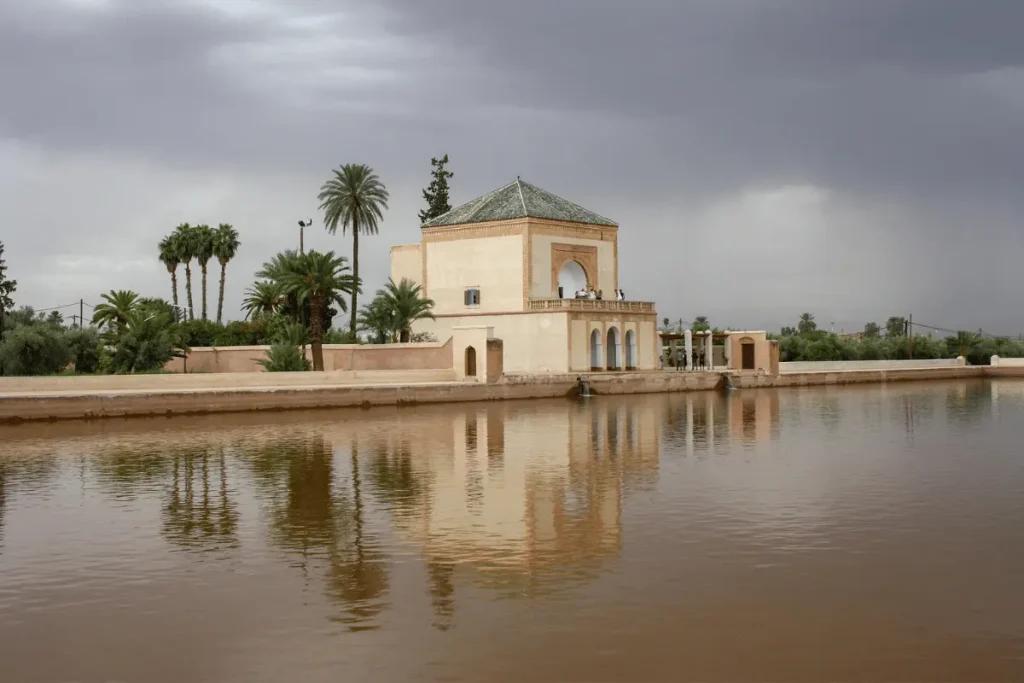
Marrakech is a popular starting point for a first Morocco trip. Its medina is a UNESCO World Heritage Site, and within a few square kilometres you get souks, palaces, gardens, riads, rooftop terraces and a food scene that ranges from street stalls to serious fine dining. It is also the easiest base for day trips into the mountains, the desert edge and the coast.
Top Things to Do in Marrakech
- Jemaa el-Fna: the main square. Come at sunset when the food stalls and performers set up, then have dinner at a stall.
- Koutoubia Mosque: the 12th-century minaret you’ll use as a landmark all week. Non-Muslims can’t enter but the gardens are open.
- Bahia Palace and El Badi Palace: the best introduction to Moroccan palace architecture. Go early to beat tour groups.
- Saadian Tombs: small, ornate and worth a short visit.
- Ben Youssef Madrasa: a restored Islamic college with an exceptional courtyard.
- Majorelle Garden and the Yves Saint Laurent Museum: a calm cobalt-blue garden and a museum next door in Gueliz.
- The souks: get deliberately lost, then buy leather, lanterns, ceramics or spices. Haggle politely.
- Day trips: Ourika Valley, Essaouira, the Agafay stone desert (about 45 minutes away, sunset dinners but no big dunes), or Ouzoud Waterfalls.
For prices, opening hours and a map of every sight, see our guide to the best things to do in Marrakech. Marrakech experiences: see the Klook activities below to compare available tours.
How Many Days in Marrakech?
Plan 2–3 days. Two days covers the highlights. Three days lets you slow down or add a day trip. If you are heading to the desert afterward, take the extra day in Marrakech rather than rushing the south. Our 3 days in Marrakech itinerary plans each day in detail.
Where to Stay in Marrakech
Stay in a riad in or near the medina for atmosphere and walkability. Choose Gueliz or Hivernage if you prefer wide streets, modern restaurants and easy taxi access. Ultra-luxury travellers often look at La Mamounia (a historic palace hotel) or resort-style stays on the city’s edge.
Marrakech stays: compare every neighborhood in our guide to where to stay in Marrakech, see our picks of the best riads and hotels in Marrakech, or compare Marrakech riads and hotels on Klook →
Fes (Fez)
Why Visit Fes?
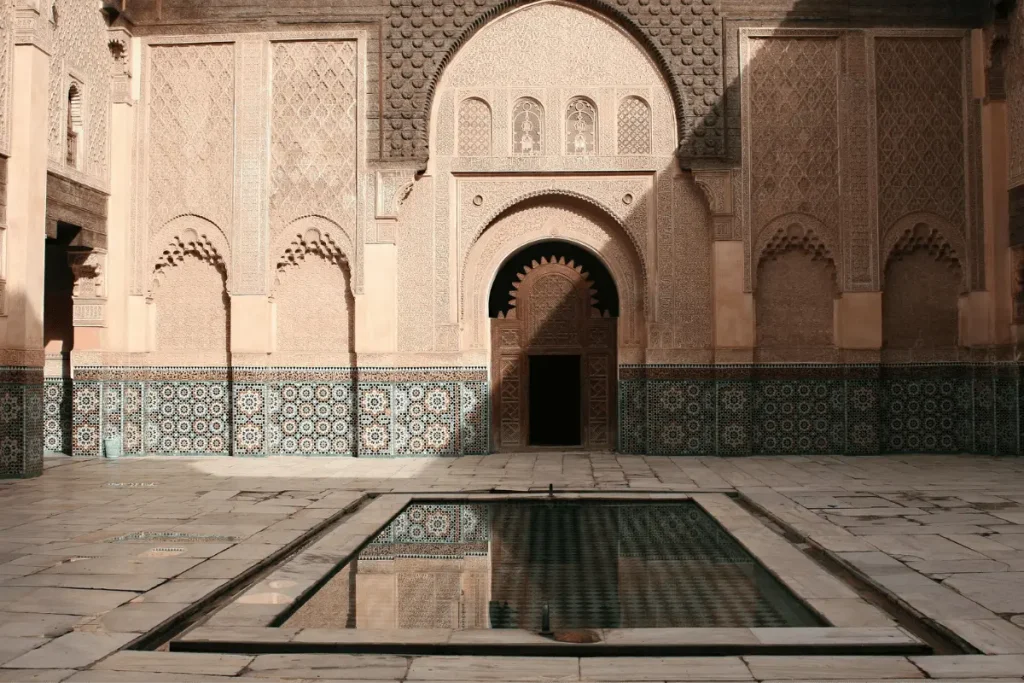
Fes (also spelled Fez) is Morocco’s cultural heart. Its old city, Fes el-Bali, is a UNESCO World Heritage Site and among the most complete medieval Islamic cities still in daily use. It is also one of the largest car-free urban zones in the world, so donkeys and porters still move goods through streets too narrow for anything else. Fes has a different character from Marrakech, with a strong emphasis on historic streets, crafts and traditional urban life.
Top Cultural and Historical Sights
- Bou Inania Madrasa and Al-Attarine Madrasa: two of the finest examples of Marinid architecture in the country.
- Al-Qarawiyyin: founded in 859 and widely recognised as one of the oldest continuously operating universities in the world. Non-Muslims cannot enter, but you can see the doorways.
- Chouara Tannery: the classic view of leather dyeing pits, best seen from the surrounding leather shops in the morning. Expect strong smells (a mint sprig helps) and a sales pitch.
- Bab Bou Jeloud: the blue gate at the medina’s western entrance and a good starting point.
- Nejjarine Museum of Wood Arts and Crafts: a restored funduq with a lovely interior.
- Merenid Tombs viewpoint: a sunset panorama over the whole medina.
Our tip: hire a licensed guide for your first half-day. The medina has thousands of alleys and few clear signs. Agree the price before you begin, and arrange it through your hotel or a booked tour, not a stranger in the street.
Fes experiences: Compare available guided activities in the Klook widget below.
How Many Days in Fes?
Plan 2–3 days. Two days handles the main sights. A third day gives you time to explore Meknes and Volubilis or simply get lost in the alleys.
Where to Stay in Fes
A riad inside Fes el-Bali gives you the full atmosphere but a longer walk with luggage (porters help). The Ville Nouvelle offers easier taxi and vehicle access and modern hotels. Many travellers split the difference with a riad near a main gate such as Bab Bou Jeloud.
Fes stays: Compare riads and hotels on Klook →
Chefchaouen
Why Visit Chefchaouen?
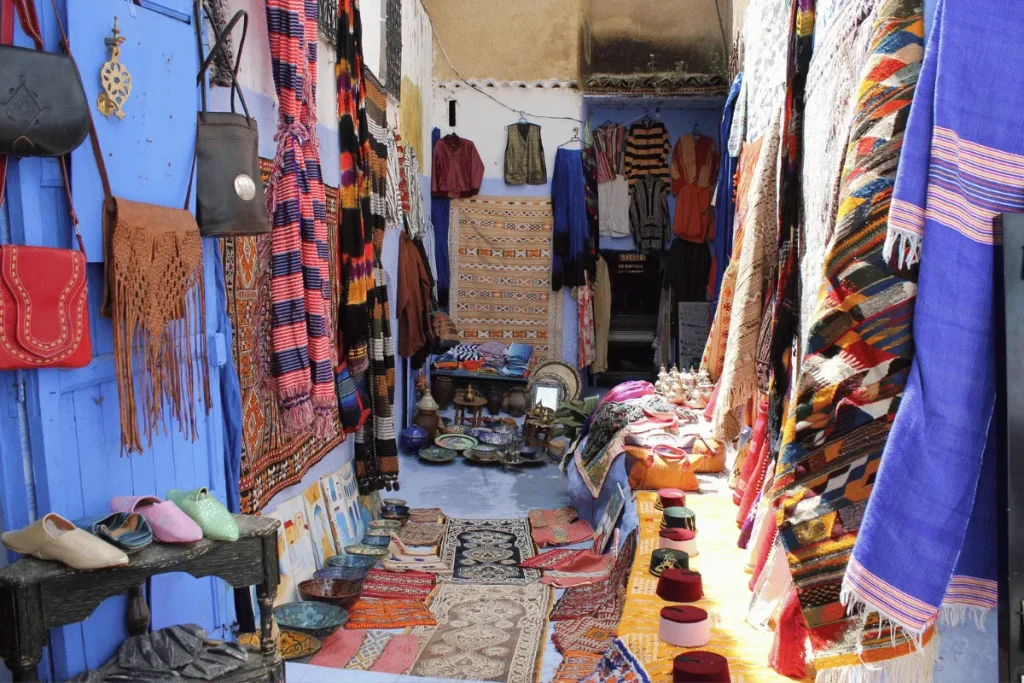
Chefchaouen, the “Blue Pearl,” is a hillside town in the Rif Mountains known for its blue-washed lanes, cooler air and slow pace. It suits travellers who want a break from Morocco’s large cities and enjoy photography, hiking and simply strolling.
Best Places to See in Chefchaouen
- The blue medina: wander with no plan, since every alley is photogenic.
- Plaza Uta el-Hammam and the Kasbah: the main square and its small museum and gardens.
- Spanish Mosque viewpoint: a 20–30 minute walk up for a sunset view over the town.
- Akchour Waterfalls and God’s Bridge: a half-day hike in Talassemtane National Park, about an hour from town.
Our tip: the town is busiest in the middle of the day. Go out early in the morning or after 5 p.m. for the best light and fewer people.
How Many Days in Chefchaouen?
Plan 1–2 days. One night is enough for the town; add a second if you want to hike at Akchour.
Where to Stay in Chefchaouen
Choose a small guesthouse or riad inside or near the medina. Almost everything is walkable, and many places have rooftop terraces with mountain views.
Chefchaouen stays: Compare current accommodation options using your hotel affiliate setup.
Merzouga & the Sahara Desert
Why Visit the Sahara?
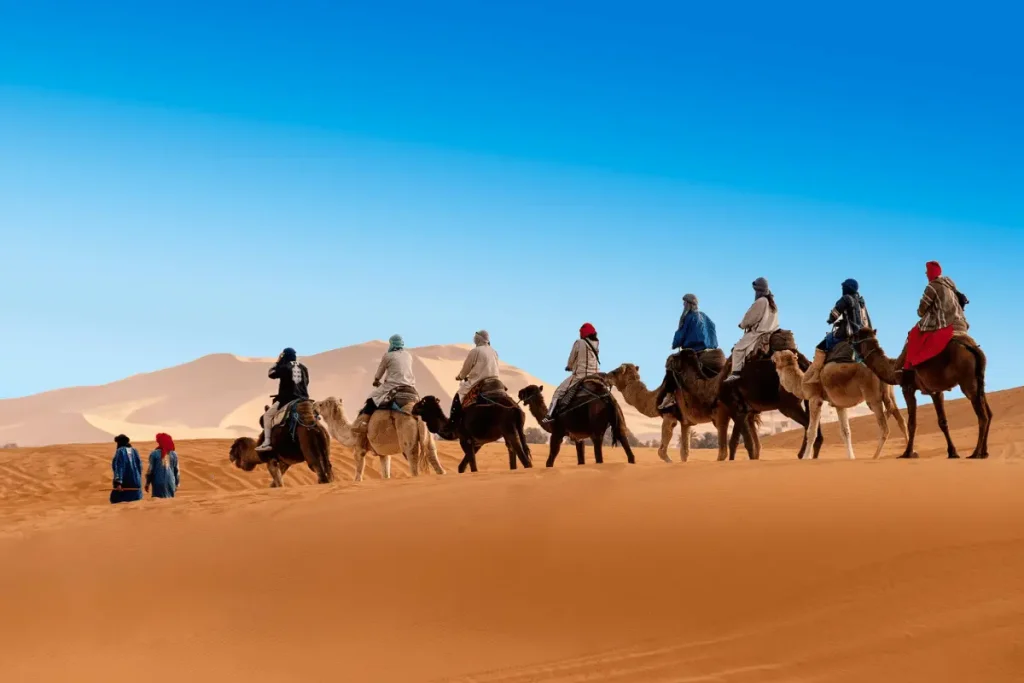
Merzouga is the gateway to Erg Chebbi, Morocco’s most famous dune field, where sand rises to well over 100 metres. For many travellers, a night in the desert is the emotional high point of the trip: silence, a sky full of stars and dunes that change colour at sunset and sunrise.
Best Desert Experiences
- Camel trek at sunset to your camp, usually 1–1.5 hours.
- A night in a desert camp: from simple Berber tents to luxury tented suites with private bathrooms. Ask what is included (dinner, breakfast, drumming, blankets).
- Sunrise on the dunes: climb before the camp wakes up.
- 4×4 or quad excursion across the dune edge and to nearby villages, plus a visit to a Gnawa music session or nomad family.
- Sandboarding: rent a board from local operators.
How Many Nights in the Sahara?
Plan at least 1 night in the desert; 2 nights feels far less rushed, especially after a full day of driving. Merzouga is too far for a comfortable day trip from any major city.
Desert Tour Tips
- Standard tours from Marrakech and Fes run 2–4 days. Compare itineraries: the best ones stop at Aït Ben Haddou, Todra or Dades Gorge and give you enough time at the dunes.
- Typical prices for a 3-day Marrakech–Merzouga tour range from roughly US$120 to US$350+ per person, depending on group size, hotel and camp quality. (Estimate: check current prices before booking.)
- Pack layers. Desert nights are cold in winter, and summer days can be extremely hot.
- Skip Agafay and Zagora if the tallest dunes matter to you. Merzouga has them.
Desert tours: Compare current Marrakech–Merzouga experiences in the Klook activity widget.
Where to Stay in Merzouga
Camps range from budget tents to boutique luxury camps. Choose based on bathroom access, distance from the main dunes, group size and reviews from the last 12 months.
Desert stays: Compare Merzouga camp options on Klook →
Essaouira
Why Visit Essaouira?
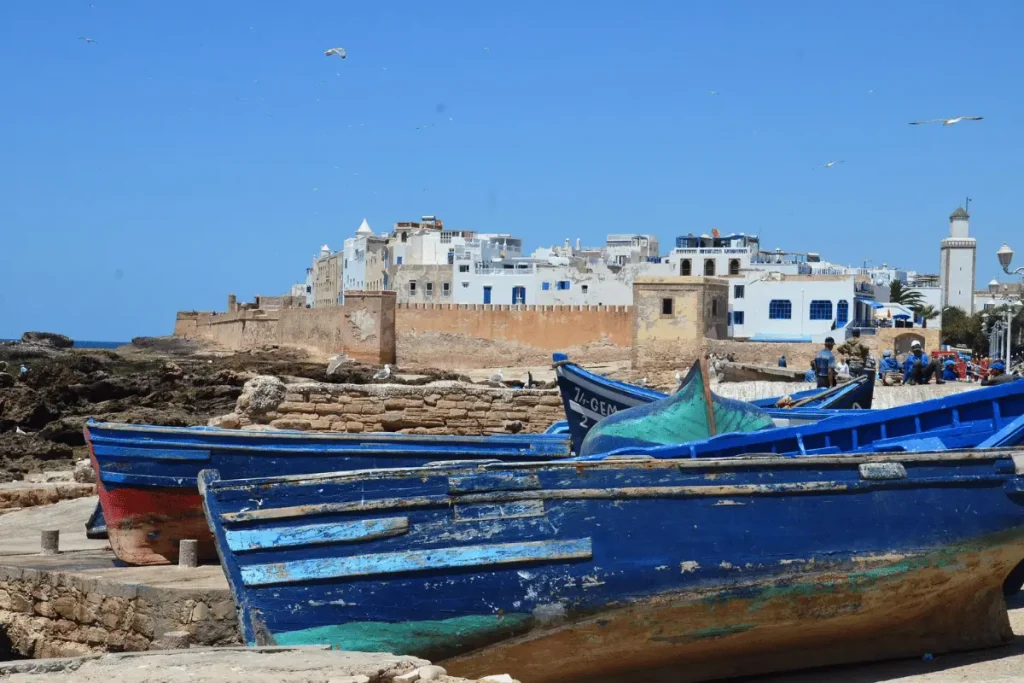
Essaouira is a whitewashed, blue-shuttered Atlantic port with ramparts, a busy fishing harbour and constant breeze. It’s calmer and cooler than Marrakech, with a bohemian artist streak. UNESCO recognises its medina as an outstanding example of a late-18th-century fortified port city that combines North African and European design.
Best Things to Do in Essaouira
- Skala de la Ville: the old ramparts with cannons and ocean views.
- The harbour and grill stalls: choose your fish at the port and have it grilled on the spot.
- The medina: known for thuya wood craftsmen, art galleries and quiet lanes.
- The beach: long, windy and popular with kitesurfers and windsurfers.
- Music festivals: check dates for the Gnaoua World Music Festival, usually held in June.
How Many Days in Essaouira?
Plan 2 days. It works as a day trip from Marrakech (about 2.5–3 hours each way) but you’ll lose most of the atmosphere. Staying overnight is far better.
Where to Stay in Essaouira
Book a riad in the medina for character or a seafront hotel for beach access and sunset views.
Essaouira stays: Compare current riads and seaside hotels using your hotel affiliate setup.
Aït Ben Haddou (Ait Benhaddou) & Ouarzazate
Why Visit Aït Ben Haddou & Ouarzazate?
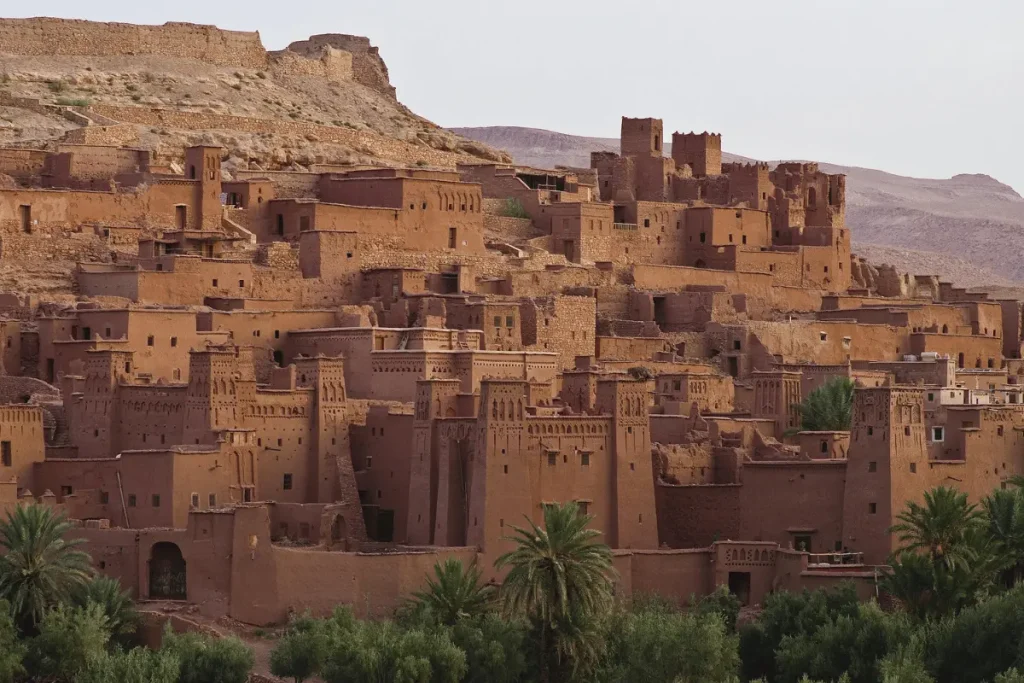
Aït Ben Haddou is a UNESCO-listed fortified village (ksar) of earthen clay buildings on a hillside above a river. It has appeared in many films and TV series, which is why it looks familiar. Ouarzazate, a short drive away, is a practical stop with film studios and the Taourirt Kasbah.
Best Places to See
- Aït Ben Haddou: cross the river, climb to the top granary for the view, and go early or late to avoid the day-trip crowds.
- Taourirt Kasbah in Ouarzazate: a former Glaoui residence with decorated rooms.
- Atlas Film Studios: a fun stop if you enjoy cinema history.
- Skoura Oasis and the Draa Valley: a green palm-grove landscape near Ouarzazate.
How to Visit
This region sits on the classic Marrakech-to-Sahara road over the Tizi n’Tichka pass. It works best as a stop on a 2–4 day trip, not as a stand-alone destination. If you have a car, allow extra time for photo stops in the pass.
Plan 1–2 days. Overnight in the area if you want to see the ksar at sunset or sunrise once the coaches leave.
Aït Ben Haddou experiences: Compare available activities in the Klook activity widget.
Atlas Mountains
Why Visit the Atlas Mountains?
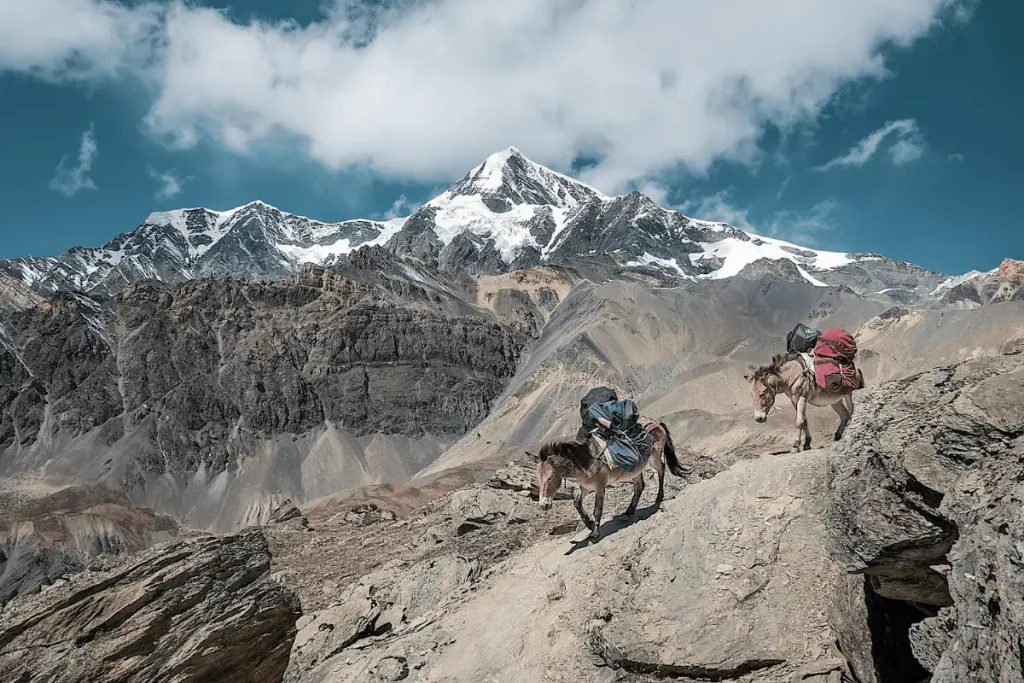
The High Atlas is where Morocco slows down: terraced valleys, Amazigh (Berber) villages, walnut groves and views of snow in winter. It is home to Jbel Toubkal, 4,167 m, the highest peak in North Africa. The mountains are also the easiest way to balance a city-heavy itinerary with fresh air and hiking.
Best Hiking & Nature Experiences
- Imlil: the trailhead for Toubkal and easy village walks. Multi-day treks are possible with a certified mountain guide.
- Ourika Valley: closer to Marrakech, with riverside cafés and waterfalls. Very busy at weekends.
- Village stays and mule treks: available with local guides and family-run guesthouses.
- Winter and spring: snow may block higher trails from roughly December to March. Toubkal winter climbs require experience and equipment.
How to Visit
For a short trip, take a day trip from Marrakech to Imlil or Ourika. If you have more time, stay 1–2 nights in a mountain guesthouse. Always confirm the current road and trail conditions before you go.
Plan 2–3 days for a proper mountain break.
Atlas Mountains experiences: Compare available day trips and outdoor activities in the Klook activity widget.
Casablanca
Why Visit Casablanca?
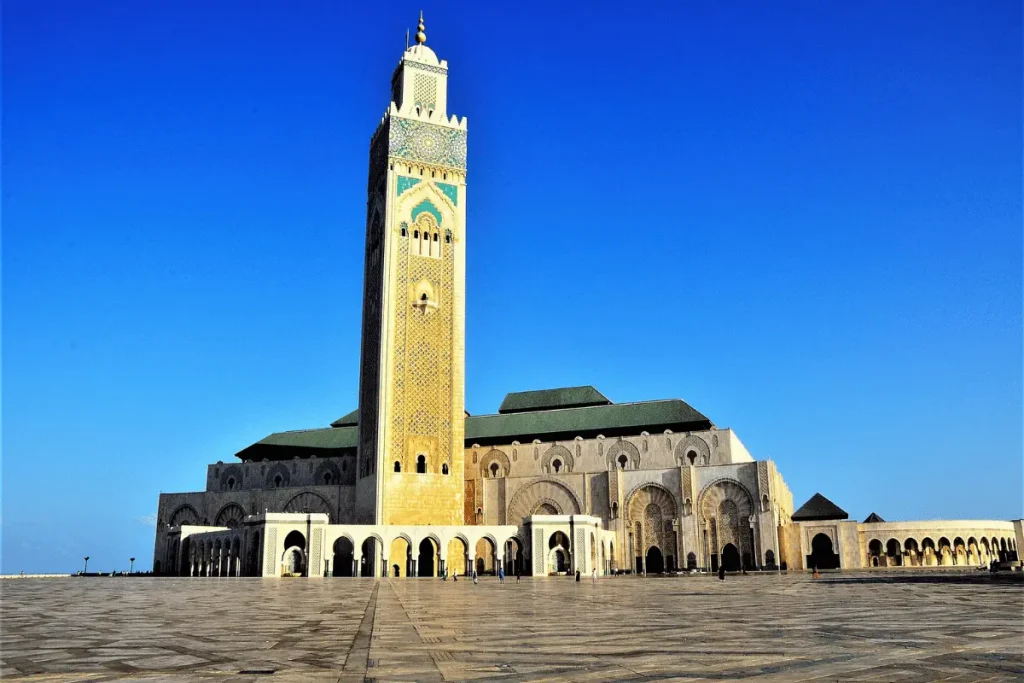
Casablanca is Morocco’s largest city and economic capital. It isn’t a classic tourist medina, but it does offer modern Morocco: Art Deco buildings, ocean promenades, cafés and one of the country’s most impressive religious buildings. It is also a major transport hub, so most visitors pass through anyway.
Top Things to See in Casablanca
- Hassan II Mosque: one of the largest mosques in the world, with a minaret about 200 metres tall, partly built over the Atlantic. Non-Muslims can enter on a guided tour at set times. Check the current schedule.
- The Corniche (Ain Diab): the beachfront strip for a stroll or seafood.
- Art Deco downtown: the Habous quarter and central boulevards.
- Rick’s Café: a themed restaurant inspired by the classic film, more atmospheric than authentic.
How Many Days in Casablanca?
Plan 1–2 days. Use Casablanca as your arrival or departure point, then head to Rabat, Marrakech or Tangier by train.
Casablanca experiences: Check the current Klook activity listings.
Rabat
Why Visit Rabat?
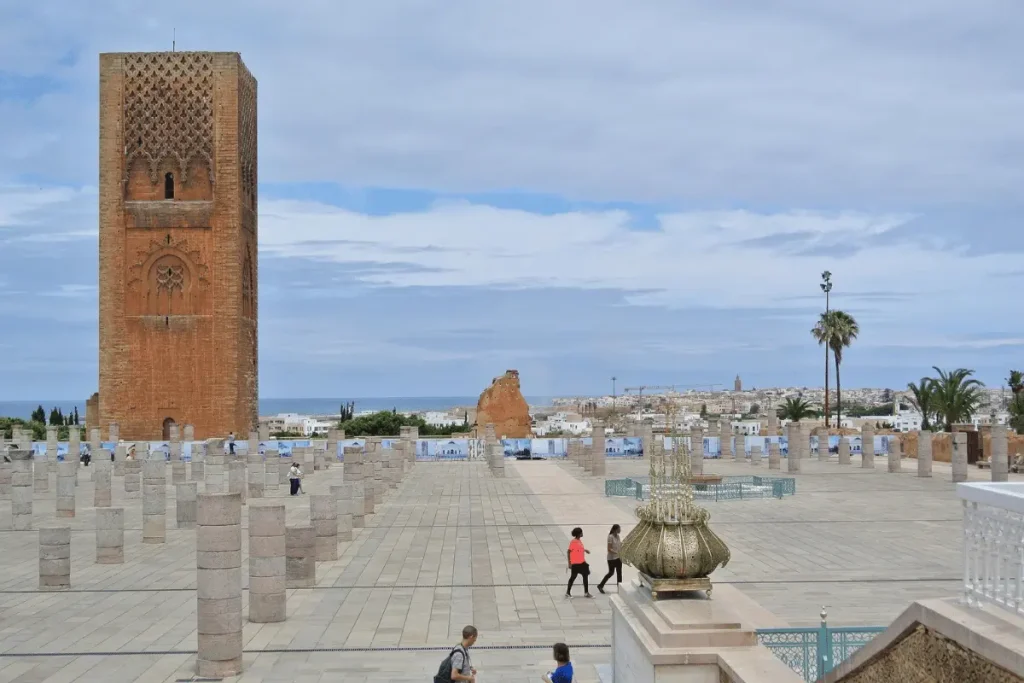
Rabat, the capital, is calmer, greener and cleaner than most Moroccan cities. It combines a walled kasbah, a riverfront, a small medina and modern government districts. Its heritage is recognised by UNESCO as “Rabat, Modern Capital and Historic City: a Shared Heritage.”
Historical & Cultural Highlights
- Kasbah of the Udayas: blue-and-white lanes, Andalusian gardens and an Atlantic view.
- Hassan Tower and Mohammed V Mausoleum: unfinished 12th-century minaret and a royal mausoleum side by side.
- Chellah: Roman and Marinid ruins with storks nesting in the walls.
- Mohammed VI Museum of Modern and Contemporary Art: a strong stop for art lovers.
- The Bouregreg riverfront: an easy evening walk toward Salé.
How Many Days in Rabat?
Plan 1–2 days. It also works as a stopover on the train between Casablanca and Tangier or Fes.
Agadir
Why Visit Agadir?
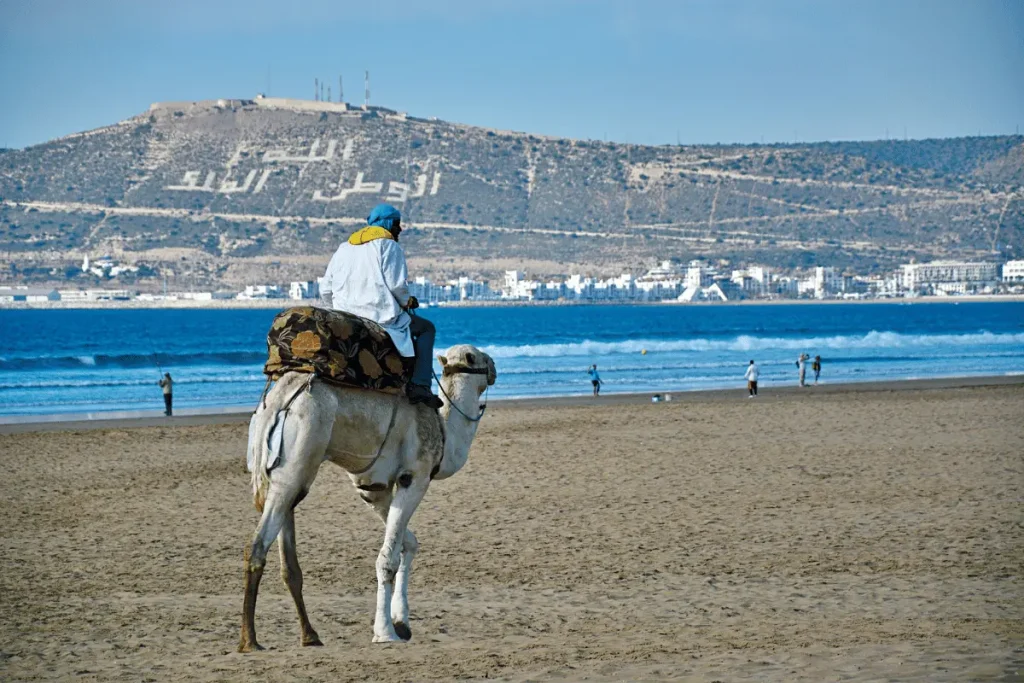
Agadir is Morocco’s main beach resort city, with a wide sandy bay, mild weather most of the year and a modern grid layout. The city was rebuilt after the 1960 earthquake, so expect a modern seaside feel, not a medieval medina. The Moroccan National Tourist Office promotes the Agadir–Taghazout stretch for beaches and water sports.
Best Beaches & Things to Do in Agadir
- Agadir Beach and the promenade: long, flat and family-friendly.
- Agadir Oufella Kasbah: hilltop ruins with panoramic views.
- Taghazout: a laid-back surf village north of the city.
- Paradise Valley: swimming holes and palm-lined gorges inland.
- Souss-Massa National Park: birdwatching south of Agadir.
How Many Days in Agadir?
Plan 2–3 days. Longer if you want to surf or relax. It is a good end-of-trip beach stop after a busy inland itinerary.
Agadir stays: Compare current hotels and surf-oriented properties through your hotel affiliate setup.
Tangier
Why Visit Tangier?
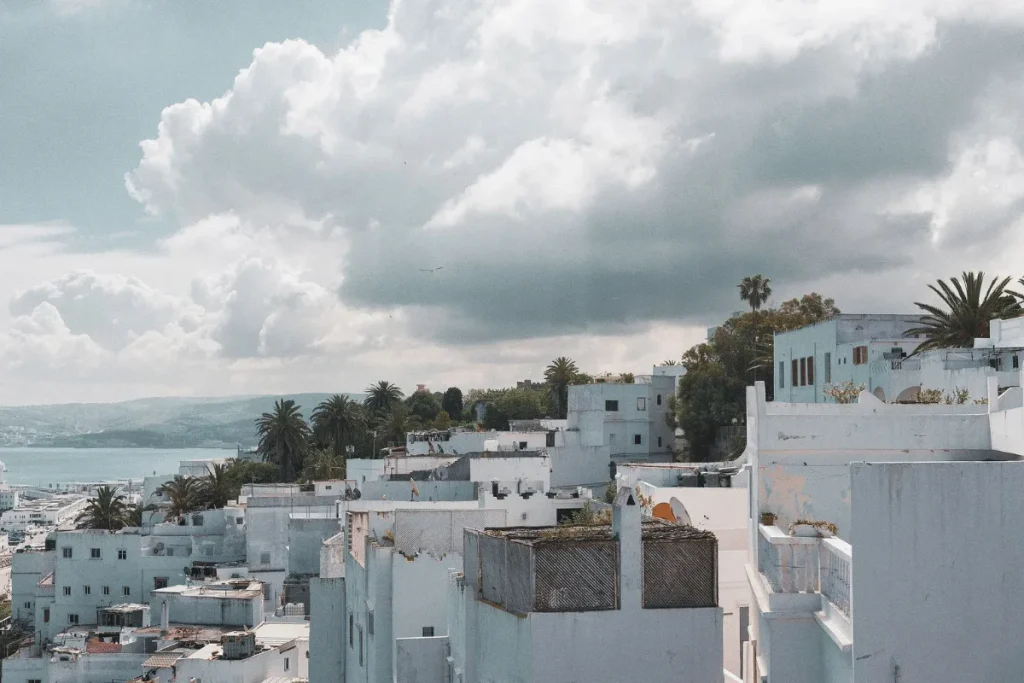
Tangier faces Spain across the Strait of Gibraltar, where the Atlantic meets the Mediterranean. It has long attracted writers, artists and traders, and it now blends heritage with new waterfront development. It’s a practical arrival or departure point for northern Morocco and the ferry connection to Europe.
Best Things to Do in Tangier
- The medina and Petit Socco: the historic centre.
- Kasbah Museum: art and archaeology in the old palace.
- Café Hafa: a cliffside café famous for mint tea and sea views.
- Cape Spartel and the Caves of Hercules: coastal viewpoints just outside the city.
- Al Boraq high-speed train: Morocco’s fastest rail link, connecting Tangier with Kenitra, Rabat and Casablanca.
How Many Days in Tangier?
Plan 1–2 days. Add one more if you plan day trips to Asilah or Chefchaouen.
More Places Worth Adding
If you have extra time, these destinations round out the classic circuit:
| Place | Why Go | Time Needed | Best Paired With |
|---|---|---|---|
| Meknes | Imperial city with Bab Mansour and the Moulay Ismail mausoleum (UNESCO) | Half day–1 day | Fes |
| Volubilis | Best-preserved Roman ruins in Morocco (UNESCO) | 2–3 hours | Meknes / Fes |
| Ouzoud Waterfalls | Multi-tiered falls about 110 m high, with monkeys and boat rides | Day trip | Marrakech |
| Todra & Dades Gorges | Dramatic canyons and road-trip scenery | Overnight | Aït Ben Haddou → Merzouga route |
| Asilah | Whitewashed seaside town with murals | Half day | Tangier |
| Dakhla | Kitesurfing lagoon in the far south | 3–5 days | Long trips only (very far from the other destinations) |
Morocco has nine cultural properties on the UNESCO World Heritage List, including Fes, Marrakech, Aït Ben Haddou, Essaouira, Rabat, Meknes and Volubilis. You can check the current list on the UNESCO World Heritage Centre.
Best Places in Morocco by Travel Style
First-Time Visitors
Choose Marrakech, Fes, the Sahara, Chefchaouen and Essaouira. Together they give you a city, a medieval medina, the desert, mountains and the coast.
Couples
Marrakech, Essaouira, Chefchaouen and a Sahara camp pair atmosphere with privacy: rooftop dinners, boutique riads, sunset walks and a night under the stars.
Families
Marrakech, Essaouira, Agadir and Ouzoud Waterfalls work well: a mix of shorter transfers, beaches and easy outdoor stops. Skip the longest desert drives if children are young.
Adventure
Merzouga, the Atlas Mountains, Todra Gorge and Ouarzazate for hiking, 4×4 days and road trips. Add surf at Taghazout for coastal action.
Beaches & Relaxation
Essaouira, Agadir and Taghazout give you the easiest downtime. Essaouira is windier and more atmospheric; Agadir is warmer and more resort-oriented.
History & Culture
Fes, Marrakech, Meknes, Volubilis, Rabat and Aït Ben Haddou offer the deepest heritage. Fes is particularly well suited to travelers focused on heritage and traditional city life.
Nature & Hiking
The Atlas Mountains, Chefchaouen (Akchour) and the Erg Chebbi dunes offer the most varied landscapes.
How to Combine Morocco’s Top Destinations
The most common itinerary mistake is trying to see everything. Group places into a logical loop and accept that some will wait for a second trip.
7-Day Morocco Itinerary: Marrakech and the Sahara
| Day | Plan | Overnight |
|---|---|---|
| 1 | Arrive in Marrakech; evening in Jemaa el-Fna | Marrakech |
| 2 | Full day in the medina, palaces and Majorelle Garden | Marrakech |
| 3 | Drive over the Tizi n’Tichka pass to Aït Ben Haddou, continue to Dades Valley | Dades / Boumalne |
| 4 | Todra Gorge, then on to Merzouga; sunset camel trek | Desert camp |
| 5 | Sunrise on the dunes; long drive back toward Ouarzazate | Ouarzazate / Skoura |
| 6 | Taourirt Kasbah, then back to Marrakech | Marrakech |
| 7 | Last souk stop and departure | — |
Adding northern cities turns a week into a series of long travel days, so keep this one focused.
10-Day Morocco Itinerary: Cities, Desert and Blue Mountains
| Day | Plan | Overnight |
|---|---|---|
| 1–2 | Marrakech | Marrakech |
| 3 | Aït Ben Haddou → Dades Valley | Dades / Boumalne |
| 4 | Todra Gorge → Merzouga; camel trek | Desert camp |
| 5 | Merzouga → Fes (long day, stop in Midelt or Ifrane) | Fes |
| 6 | Fes medina | Fes |
| 7 | Optional Meknes and Volubilis → Chefchaouen | Chefchaouen |
| 8 | Chefchaouen (or hike Akchour) | Chefchaouen |
| 9 | Chefchaouen → Tangier (or Rabat) | Tangier / Rabat |
| 10 | Depart from Tangier, Rabat or Casablanca | — |
14-Day Morocco Itinerary: Add the Coast
| Day | Plan | Overnight |
|---|---|---|
| 1–3 | Marrakech (add Ourika or Ouzoud as a day trip) | Marrakech |
| 4–5 | Essaouira | Essaouira |
| 6 | Essaouira → Aït Ben Haddou / Dades (long drive; via Marrakech) | Aït Ben Haddou / Dades |
| 7 | Todra Gorge → Merzouga; camp | Desert camp |
| 8 | Merzouga → Fes | Fes |
| 9–10 | Fes (day trip to Meknes and Volubilis) | Fes |
| 11 | Fes → Chefchaouen | Chefchaouen |
| 12 | Chefchaouen (Akchour hike or rest) | Chefchaouen |
| 13 | Tangier or Rabat | Tangier / Rabat |
| 14 | Depart | — |
The right order depends on your arrival and departure airports. You can also reverse either route, starting in Casablanca or Tangier and ending in Marrakech.
Multi-day tours: Compare current Morocco tour options in the Klook activity widget below.
Where to Stay in Morocco
Accommodation shapes your Morocco trip as much as the destinations do. The choice is usually between a traditional riad (a courtyard house with rooms around a central patio), a kasbah-style hotel, an international hotel or a beach resort.
| Destination | Best Area | Stay Type | Booking |
|---|---|---|---|
| Marrakech | Medina or Gueliz / Hivernage | Riad or luxury hotel | See accommodation options |
| Fes | Fes el-Bali (medina) or Ville Nouvelle | Riad | See accommodation options |
| Chefchaouen | In or beside the medina | Guesthouse / small riad | See accommodation options |
| Essaouira | Medina or seafront | Riad or beach hotel | See accommodation options |
| Merzouga | Erg Chebbi dunes | Desert camp (basic to luxury) | See accommodation options |
| Aït Ben Haddou / Dades | Near the ksar or in the valley | Kasbah hotel | See accommodation options |
| Casablanca | Downtown or Corniche | Business or seafront hotel | See accommodation options |
| Rabat | Near the medina or Agdal | Riad or hotel | See accommodation options |
| Agadir / Taghazout | Seafront or surf village | Resort or surf camp | See accommodation options |
| Tangier | Medina or Marina | Riad or boutique hotel | See accommodation options |
What to compare before booking:
- Location and luggage access: some medina riads need a porter from the nearest car drop-off.
- Cancellation policy: important for trips with long transfers.
- Recent guest reviews: prioritise the last 12 months.
- Breakfast, air conditioning or heating: heating matters in winter, especially in the mountains and desert.
- Airport or station transfer: many riads arrange it for a fixed fee.
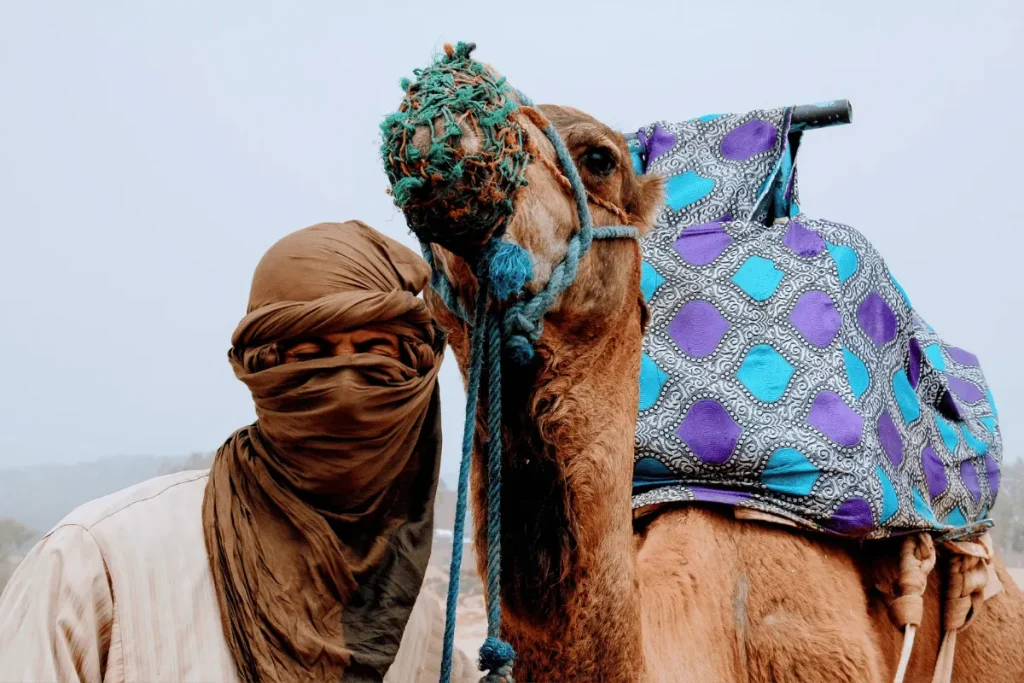
Accommodation: Compare Morocco hotels, riads and desert stays through your chosen accommodation affiliate.
Best Time to Visit Morocco
Morocco can be visited all year, but the best month depends on where you’re going.
Best Months
March to May and September to November are the best all-round periods. Temperatures are more comfortable for combining cities, mountains and the desert.
Morocco by Season
| Season | Best For | Watch Out For |
|---|---|---|
| Spring (Mar–May) | Cities, hiking, green mountain scenery | Busy around Easter and school holidays |
| Summer (Jun–Aug) | Atlantic coast (Essaouira, Agadir, Tangier) | Inland heat, often above 40 °C in Marrakech and the desert |
| Autumn (Sep–Nov) | Cities, desert, road trips | Occasional rain in the north later in the season |
| Winter (Dec–Feb) | Marrakech, Agadir, southern Morocco days | Cold nights in the desert and mountains; snow in the Atlas |
Winter
Winter suits Marrakech, Fes, Essaouira, Agadir and the south during the day, but nights can be cold (near freezing in the desert and mountains). Bring warm layers and check heating in your accommodation.
Summer
In summer, spend more time on the Atlantic coast and schedule inland sightseeing for early morning and late afternoon. Avoid long desert stays in July and August unless you’re prepared for extreme heat.
Ramadan
During Ramadan, many locals fast during the day. Most tourist services still operate, but opening hours change and some restaurants close until sunset. Dates shift by about 10–11 days earlier each year, so check the current calendar when you plan.
Morocco Travel Tips
Getting Around
Morocco offers trains, buses, taxis, private transfers and rental cars. ONCF trains are comfortable and reliable between major cities, and the Al Boraq high-speed line connects Tangier, Kenitra, Rabat and Casablanca. Check the latest schedules and ticket availability on the official rail service before departure. For the desert and mountains, private transfers, small-group tours or a rental car are usually more practical than public transport.
Trains
Trains work well for Casablanca, Rabat, Fes, Tangier and Marrakech. Book first class for reserved seats on busy routes. There is no train to Merzouga or Chefchaouen, so plan bus or transfer connections.
Car Rental & Road Trips
A rental car gives you flexibility for Aït Ben Haddou, Dades, the Atlas and the coast. Mountain passes such as Tizi n’Tichka are winding and can close in bad weather, and long stretches of the south have few fuel stops. Avoid driving at night outside cities. In cities like Fes and Marrakech, park outside the medina and walk.
Car rental: Compare available Morocco rental options using the LocalRent widget.
How Many Days Do You Need in Morocco?
A week is enough for a focused introduction (Marrakech plus the Sahara). 10–14 days lets you connect the south, the imperial cities and the north without rushing every day.
Budget Guide (Per Person, Per Day)
| Style | Approx. Daily Budget (Excluding Flights) |
|---|---|
| Budget | US$40–70 |
| Mid-range | US$100–180 |
| Luxury | US$250+ |
These are rough estimates that cover lodging, food, local transport and entry fees. Prices vary by season and city.
What to Know Before You Go
- Entry requirements: many nationalities can enter visa-free for a limited stay, but rules vary. Check your country’s official travel advice and Morocco’s official sources before booking.
- Money: the currency is the Moroccan dirham (MAD). Carry small notes and coins for taxis, cafés and souks. ATMs are common in cities.
- Connectivity: buy a local SIM or an eSIM before you arrive.
Morocco eSIM
Get your Morocco eSIM before you travel: use the eSIM affiliate widget here.
- Dress: dress modestly, especially in traditional neighbourhoods and religious sites. Light layers work well.
- Guides and scams: unofficial “helpers” in medinas may offer directions, then ask for money. A polite “no, thank you” works. Book licensed guides through your hotel or a reputable platform.
- Bargaining: expected in souks, not in fixed-price shops or restaurants. Stay friendly and start well below the first price.
- Travel insurance: recommended, particularly for road trips, mountain hikes and desert activities. Compare travel insurance options before departure.
FAQ About Visiting Morocco
What are the best places to visit in Morocco for a first trip?
The best places for a first trip to Morocco are Marrakech, Fes, the Sahara at Merzouga, Chefchaouen, Essaouira and Aït Ben Haddou. Together they show the country’s main contrasts: bustling medinas, mountains, desert and Atlantic coast. Marrakech is the easiest place to start.
How many days do you need in Morocco?
A focused Morocco trip works in 7 days, usually Marrakech plus a desert loop. Ten to fourteen days is better if you want to add Fes, Chefchaouen and the coast without rushing. Long transfers eat time, so fewer stops usually make a better trip.
What is the best time to visit Morocco?
Spring (March to May) and autumn (September to November) are the best times to visit Morocco for a multi-region trip. Temperatures are comfortable in the cities, mountains and desert. Summer suits the coast; winter is good for Marrakech and the south but cold at night.
Is Morocco safe for tourists?
Morocco is widely visited and is generally considered safe for tourists, especially in main destinations. The most common problems are petty theft, unofficial guides and overcharging in busy medinas. Use normal precautions, agree prices in advance and check your government’s latest travel advice.
How much does a trip to Morocco cost?
A Morocco trip can cost roughly US$40–70 per person per day on a budget, US$100–180 at mid-range and US$250 or more at the luxury end, excluding flights. Desert tours, riad quality and season have the biggest effect on the total.
Do I need a visa for Morocco?
Many nationalities can visit Morocco without a visa for a limited period, but rules depend on your passport. Requirements can change, so confirm with official government sources or the Moroccan consulate before you book flights and accommodation.
Which places in Morocco are best for couples?
Marrakech, Essaouira, Chefchaouen and a Sahara desert camp make a strong couples’ route. You get romantic riads, rooftop dinners, sunset walks and a night under the stars, plus a mix of city energy and quieter scenery.
Is Morocco good for a road trip?
Yes. Morocco is excellent for road trips, especially between Marrakech, Aït Ben Haddou, Ouarzazate, the Dades and Todra gorges and the Sahara. Mountain passes and long distances need planning. Between northern cities such as Casablanca, Rabat and Tangier, trains are usually faster and easier.
Can I visit the Sahara from Marrakech?
Yes, but plan at least 3 days. Merzouga is roughly 9–10 hours’ drive from Marrakech, so a day trip is not realistic. A typical tour goes via Aït Ben Haddou and the Dades or Todra gorges, spends a night in the desert and returns the next day.
What is a practical way to get around Morocco?
Trains are best between major northern cities such as Casablanca, Rabat, Fes and Tangier, and the Al Boraq high-speed line links Tangier and Casablanca. For the desert, mountains and remote areas, private transfers, small-group tours or a rental car are more practical.
Final Thoughts
Morocco rewards travellers who leave room for contrast: a morning in an ancient medina, an afternoon on a mountain road, a night in the desert and a slow last day beside the Atlantic. The best itinerary is rarely the one with the most stops. It is the one that fits your interests and gives you enough time in each place.
Start with the destinations that match your travel style, then build your route around realistic travel times, well-reviewed places to stay and one or two experiences you will remember.
Ready to plan?
- Compare flights to Morocco
- Compare Morocco tours and activities in the Klook widgets above
- Compare Morocco car rentals in the LocalRent widget above
- Read our Marrakech travel guide, compare the best cities to visit in Morocco, or start with our Morocco travel guide
Sources and further reading:
UNESCO World Heritage Centre: Morocco · Moroccan National Tourist Office