
19 Best Places to Visit in Santorini (2026 Guide)
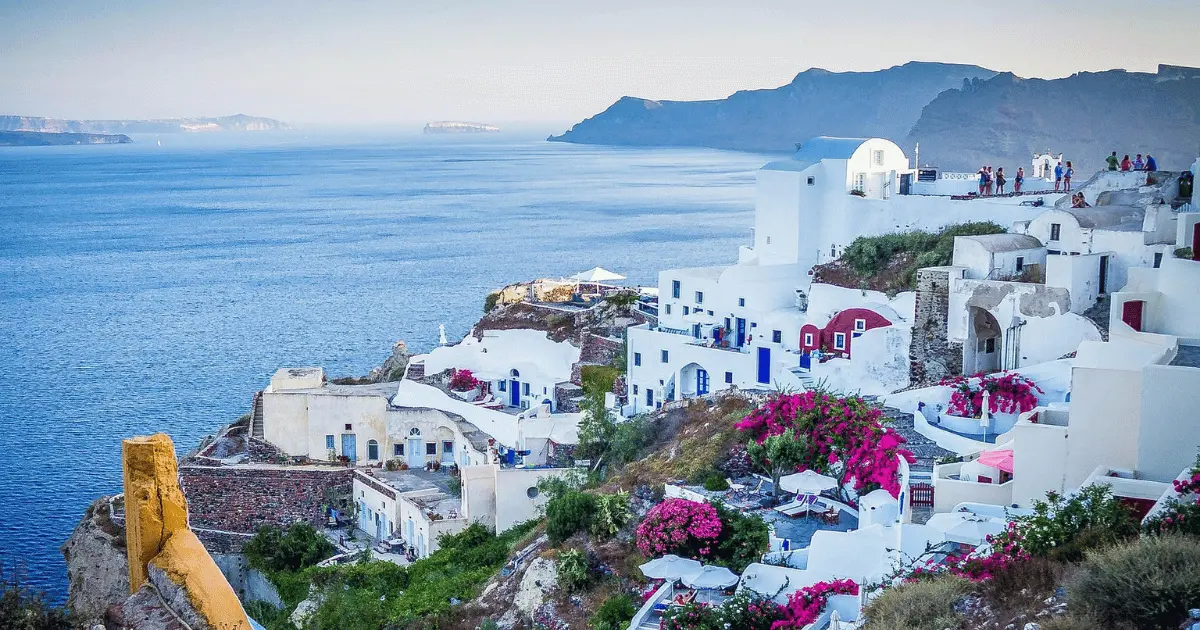
Santorini is one of Greece’s most distinctive islands, famous for its dramatic caldera, whitewashed villages, blue-domed churches, volcanic beaches, archaeological sites, and spectacular Aegean views. But the island is much more than the postcard streets of Oia.
The best places to visit in Santorini range from iconic caldera villages and traditional inland settlements to black-sand beaches, ancient ruins, volcanic landscapes, scenic viewpoints, and boat excursions around the caldera.
For first-time visitors, the challenge is not finding things to do. It is deciding which places deserve your limited time and how to combine them without spending the whole trip moving from one side of the island to another.
This guide brings together the most important Santorini attractions, including what each place is best for, how much time to allow, where to stay, how to get around, the best time to visit, and practical 1-day, 2-day, and 3-day itinerary ideas.
Planning a wider trip through Greece? Continue with our Greece Travel Guide for more destinations and trip-planning ideas.
Affiliate Disclosure: Some links in this guide may be affiliate links. If you book through them, TripAndAtlas may earn a commission at no additional cost to you. It never changes our recommendations.
Quick Answer: What Are the Best Places to Visit in Santorini?
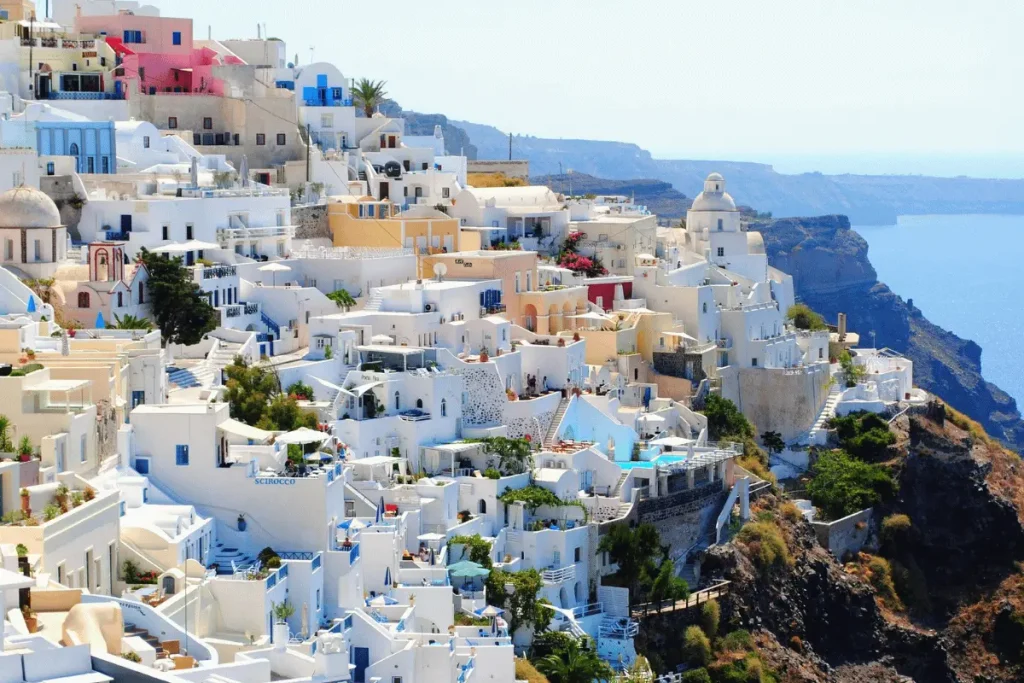
The best places to visit in Santorini depend on the kind of experience you want. Oia and Fira are the main choices for classic caldera views, dining, culture, and nightlife. Imerovigli and Firostefani offer quieter scenery along the caldera rim. Pyrgos, Megalochori, and Emporio show a more traditional side of the island, while Akrotiri is the key historical attraction.
For beach time, head to Perissa, Perivolos, or Kamari for volcanic beaches and developed waterfronts. For dramatic scenery, consider Red Beach and Vlychada, while Skaros Rock offers a short scenic walk. A boat excursion to Nea Kameni adds another perspective on Santorini’s volcanic landscape.
For most first-time visitors, 2–3 days is enough to experience the major highlights without rushing.
Key Facts at a Glance
- Best areas for first-time visitors: Fira for transportation and services, Firostefani for a calmer location near Fira, or Imerovigli for quieter caldera views.
- Ideal trip length: 2–3 days for the major highlights; 4 or more days for wineries, sailing, hiking, beaches, and slower sightseeing.
- Best time to visit: Late April to early June and September to October offer warm conditions with fewer crowds than the peak summer months.
- Akrotiri: Allow around 1.5–2 hours for the archaeological site. Ticket prices and opening hours can change, so check the official Greek heritage ticketing platform before visiting.
- Fira to Oia: KTEL buses connect the two villages, while the caldera walk is around 10.5 km one way and can take approximately 3–5 hours with stops.
- Beaches: Santorini’s coastline is volcanic, with black sand, dark pebbles, red cliffs, and other unusual rock formations rather than the soft pale sand found on many Greek islands.
Prices, opening hours, transportation schedules, and access conditions can change, particularly during different seasons. Check official sources before your trip.
Best Places to Visit in Santorini at a Glance
Santorini is easiest to understand when divided into several travel areas.
The caldera villages line the western rim of the island and are the places most associated with Santorini’s famous views. The main beaches are concentrated along the east and southeast coast, while traditional villages and archaeological sites are found inland and in the south.
The table below gives you a quick way to match each destination with the experience you want.
Quick Comparison of the Best Places in Santorini
| Place | Best for | Suggested time | Area |
|---|---|---|---|
| Oia | Sunset, photography, caldera views | 2–4 hours | North |
| Fira | Museums, dining, transport, nightlife | 2–4 hours | Central |
| Imerovigli | Quiet caldera views, sunsets, Skaros Rock | 1–2 hours | Caldera |
| Firostefani | Scenic walks and quieter atmosphere | About 1 hour | Caldera |
| Pyrgos | Traditional village, views, wine | 1–2 hours | Inland |
| Megalochori | Village atmosphere, food and wine | 1–2 hours | South-west |
| Emporio | Architecture and local atmosphere | 1–2 hours | South |
| Perissa | Black-sand beach and swimming | Half day | Southeast |
| Perivolos | Beach clubs, dining and relaxation | Half day | Southeast |
| Kamari | Easy beach day and waterfront dining | Half day | East |
| Red Beach | Volcanic scenery and photography | About 1 hour | South |
| Vlychada | Sculpted cliffs and quieter scenery | 1–3 hours | South |
| Ancient Akrotiri | Archaeology and history | 1.5–2 hours | South |
| Ancient Thera | Ruins and panoramic views | 1.5–2 hours | East |
| Skaros Rock | Walking and caldera scenery | 1–2 hours | Imerovigli |
| Nea Kameni | Volcano landscapes and boat trips | Half day | Caldera |
If You Only Have Time for Five Places
For a short visit, prioritize a balanced selection rather than trying to see every attraction.
Start with Oia for the classic Santorini experience. Then explore the Fira–Firostefani–Imerovigli caldera area for some of the island’s best viewpoints. Add Akrotiri for history, choose one black-sand beach such as Perissa, Perivolos, or Kamari, and finish with a caldera or Nea Kameni boat trip to see Santorini from the water.
Best Caldera Villages to Visit in Santorini
The villages along the caldera rim are central to the Santorini experience. Their white buildings, narrow lanes, churches, cliffside terraces, and views across the volcanic crater create the scenery that makes the island so recognizable.
You do not need to choose only one. Oia, Fira, Firostefani, and Imerovigli are close enough to combine, especially when walking part of the caldera route.
Oia
Oia is the most recognizable village in Santorini and one of the island’s main attractions. Whitewashed houses, blue-domed churches, marble lanes, small shops, and cliffside viewpoints create the classic image associated with the island.
It is particularly popular around sunset, when visitors gather for views over the caldera and surrounding Aegean Sea.
However, visiting only at sunset means missing much of what makes Oia interesting. Arriving in the morning gives you a chance to explore the lanes, browse local shops, enjoy a coffee, and experience the village before the largest evening crowds arrive.
The castle area is one of the most famous sunset viewpoints and can become very crowded. Arrive early if you want a good viewing position.
Oia is one of the best places in Santorini for photography, iconic architecture, caldera scenery, and a romantic atmosphere.
Best for: first-time visitors, photography, couples, sunset, and caldera views.
Time needed: 2–4 hours.
Fira
Fira is the capital of Santorini and one of the most useful places to include in your itinerary.
The town combines dramatic caldera views with restaurants, cafés, bars, shops, museums, and important transportation connections. The main KTEL bus network is centered here, making Fira an easy starting point for reaching other parts of the island.
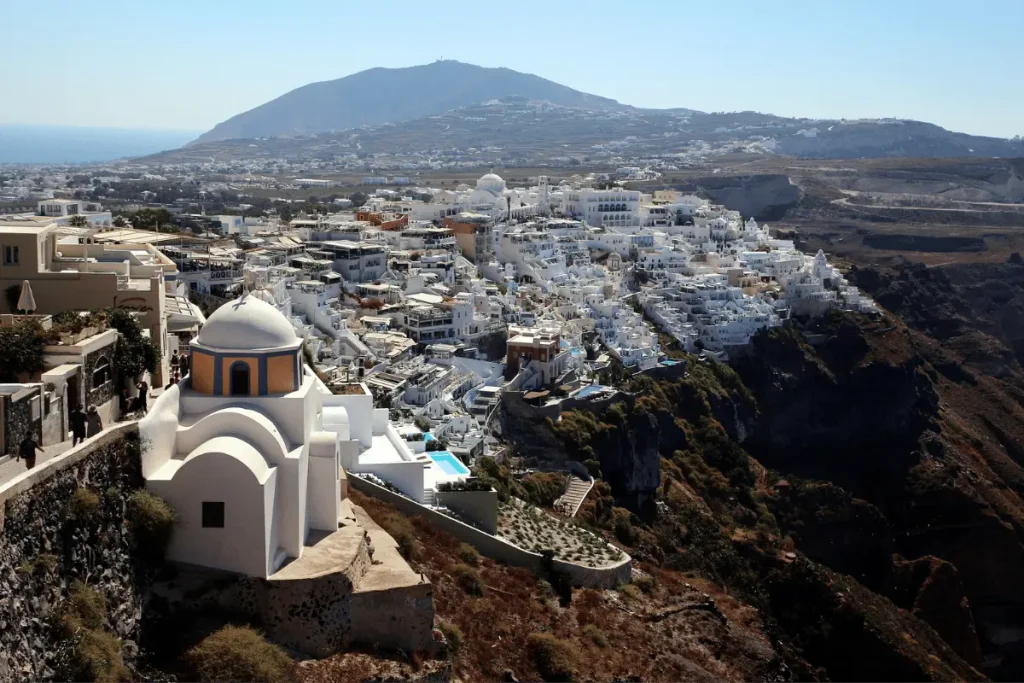
Fira is also home to the Museum of Prehistoric Thera, making it a convenient place to combine sightseeing with history and culture.
You can explore the caldera edge, visit the museum, stop for lunch overlooking the volcano, and then use Fira as a base for visiting places such as Oia, Kamari, Perissa, and Akrotiri.
Best for: culture, restaurants, nightlife, museums, transport, and first-time visitors.
Time needed: 2–4 hours.
Planning a wider trip? Continue with our Greece Travel Guide.
Firostefani
Firostefani sits immediately north of Fira and can be reached on foot from the town.
It generally feels calmer than Fira while still giving you easy access to the capital. The caldera path here is one of the most enjoyable parts of the western side of Santorini, with scenic viewpoints and views across the volcanic landscape.
Firostefani is especially useful for travelers who want caldera scenery without staying directly in the busiest part of Fira or Oia.
Best for: scenic walks, quieter accommodation, caldera views, and easy access to Fira.
Time needed: About 1 hour.
Imerovigli
Imerovigli sits between Fira and Oia on the caldera rim and is known for wide views, sunsets, and a quieter atmosphere.
Its elevated position gives it some of the island’s most impressive caldera panoramas. It is also the starting point for the walk toward Skaros Rock, making it an excellent combination of viewpoint and short hike.
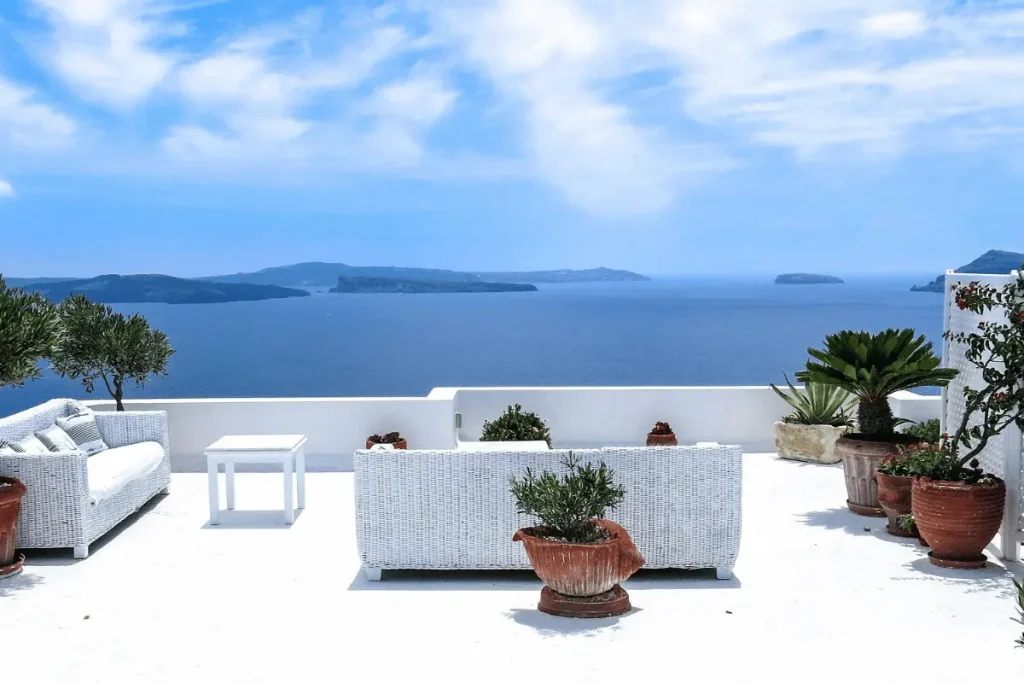
Imerovigli can be a good alternative to Oia for travelers who want the classic caldera experience without staying directly in the island’s busiest village.
Accommodation here often focuses on the view, although stairs and elevated prices are common.
Best for: couples, quiet stays, sunsets, caldera views, and scenic walks.
Time needed: 1–2 hours.
The Fira to Oia Caldera Walk
The walk from Fira to Oia is one of the most memorable ways to experience Santorini.
The route follows the caldera rim and passes through Firostefani, Imerovigli, and the area around Skaros Rock, with views across the volcanic landscape for much of the journey.
| Detail | What to know |
|---|---|
| Distance | About 10.5 km (6.5 miles) one way |
| Walking time | Around 3–5 hours with photo and water stops |
| Difficulty | Moderate |
| Terrain | Hills, stairs, cobblestones and loose gravel |
| Best direction | Fira to Oia |
| Return | KTEL bus or taxi |
| Best start | Early morning in summer |
Starting in Fira and finishing in Oia allows you to end your walk in one of Santorini’s most atmospheric villages.
This is not a flat coastal promenade. The route includes uneven surfaces, stairs, hills, and exposed sections, so comfortable footwear and plenty of water are important.
During hot summer days, an early start is much more comfortable than walking in the middle of the afternoon.
Best Traditional Villages to Visit in Santorini
The villages away from the caldera reveal a different side of Santorini.
Instead of focusing mainly on dramatic sea views and luxury accommodation, inland settlements offer traditional architecture, narrow lanes, churches, local food, vineyards, and a more residential atmosphere.
Pyrgos
Pyrgos is one of Santorini’s most attractive inland villages.
Built on a hill, the village is filled with winding streets, traditional Cycladic buildings, small churches, and views across the island. The historic castle area provides a particularly scenic viewpoint.
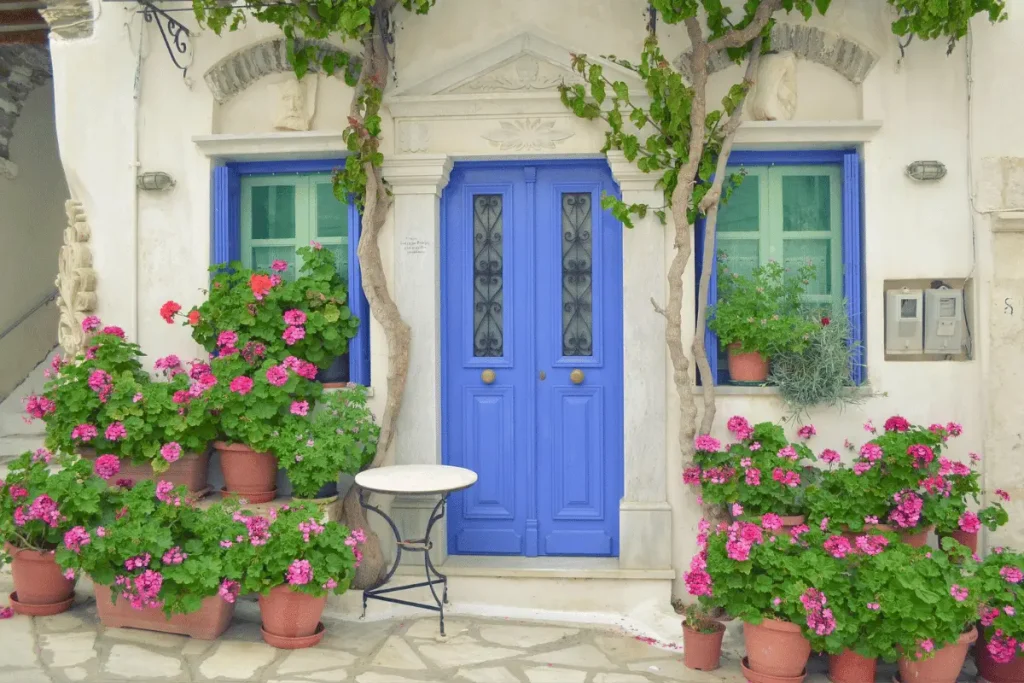
Pyrgos also works well as part of a wine-focused itinerary because of its connection with Santorini’s vineyards and wineries.
It can be a good alternative for travelers who want a beautiful sunset setting away from the busiest parts of Oia.
Best for: traditional villages, panoramic views, wine, architecture, and photography.
Time needed: 1–2 hours.
Megalochori
Megalochori offers a slower and more traditional experience.
Its small squares, whitewashed homes, churches, and narrow streets make it a pleasant place to explore without following a strict sightseeing checklist.
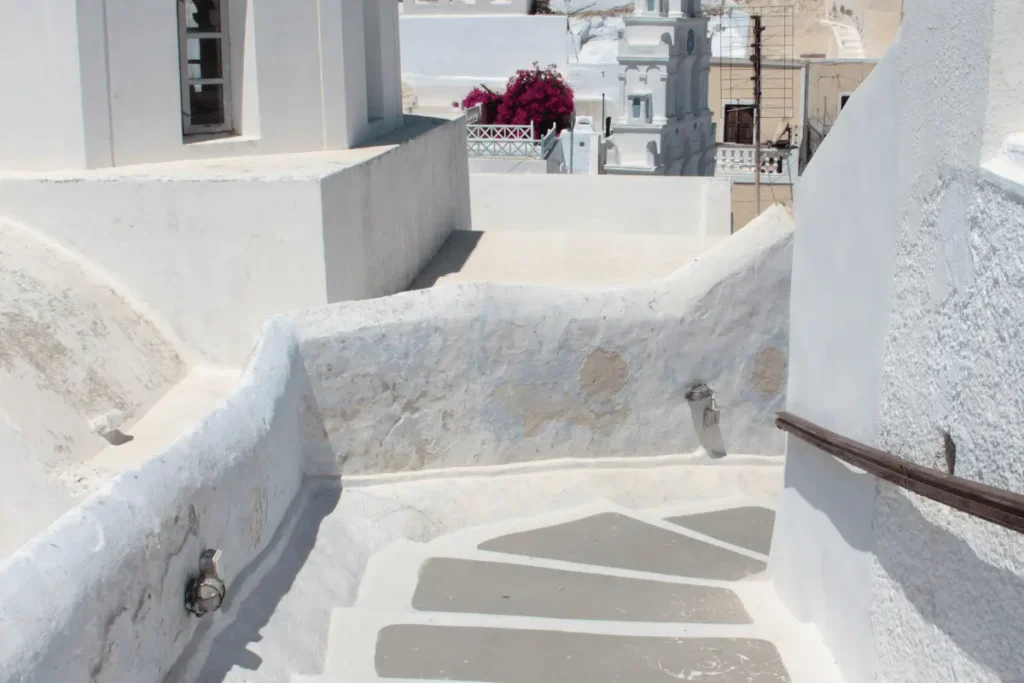
The village is closely connected with Santorini’s wine culture, making it easy to combine with a winery visit, food-focused itinerary, or relaxed lunch.
Best for: local atmosphere, food, wine, traditional architecture, and relaxed exploration.
Time needed: 1–2 hours.
Emporio
Emporio is one of the largest settlements on the island and has a historic fortified center with narrow, covered lanes and traditional architecture.
Compared with the famous caldera villages, it can feel more lived-in and less focused on tourism.
That makes it particularly interesting for travelers who want to see a different side of Santorini while exploring the southern part of the island.
Best for: architecture, history, local atmosphere, and southern Santorini.
Time needed: 1–2 hours.
Santorini Wineries and Wine Experiences
Santorini’s volcanic landscape and dry climate are strongly associated with Assyrtiko, the island’s signature white grape.
Many wineries around Pyrgos, Megalochori, and other parts of the island offer tastings, some with caldera or countryside views.
A winery visit can fit naturally into an itinerary that also includes traditional villages, especially if you are spending time around Pyrgos or Megalochori.
During busy travel periods, popular tastings can fill up, particularly around sunset, so advance booking is useful.
Best Beaches in Santorini
Santorini’s beaches are shaped by the island’s volcanic geology.
Instead of the soft, pale sand found on many Greek islands, visitors can expect dark volcanic sand, black pebbles, colorful cliffs, and unusual coastal rock formations.
Perissa Beach
Perissa is one of the best-known black-sand beaches in Santorini.
The long shoreline is backed by restaurants, cafés, accommodation, and beach facilities, making it easy to spend several hours here.
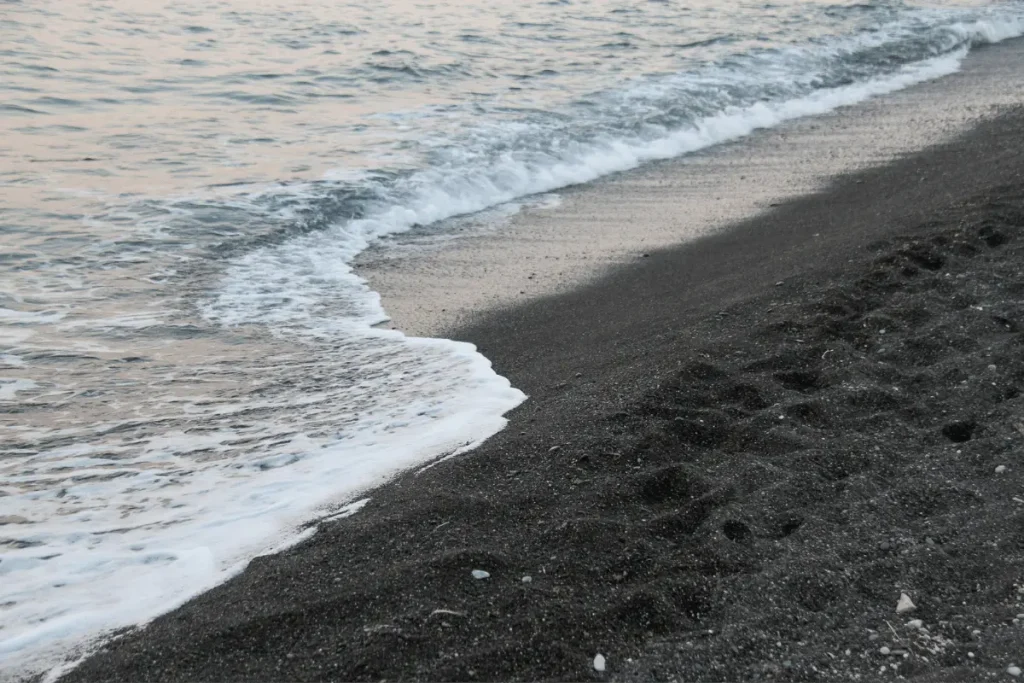
Perissa is a good option when you want a genuine beach day rather than a quick photo stop between sightseeing destinations.
The dark sand can become very hot during the middle of summer, so beach footwear is useful.
Best for: swimming, families, longer beach days, and convenient facilities.
Time needed: Half a day.
Perivolos Beach
Perivolos continues along the southeastern coast from the Perissa area and offers a broad volcanic shoreline with restaurants and beach clubs.
It works particularly well for travelers who want to combine swimming with dining, relaxation, and a more developed beach atmosphere.
Best for: beach clubs, dining, swimming, and relaxation.
Time needed: Half a day.
Kamari Beach
Kamari is one of the island’s most developed beach areas.
Its black-pebble beach is backed by a long waterfront lined with restaurants, cafés, and accommodation. Mesa Vouno rises behind the beach, creating a distinctive landscape.
Kamari is especially practical for travelers who prefer staying by the beach rather than on the caldera.
Best for: families, convenience, dining, and beach-focused holidays.
Time needed: Half a day.
Red Beach
Red Beach is one of the most dramatic coastal landscapes in Santorini.
Rust-colored volcanic cliffs contrast with the dark shoreline and blue sea, creating one of the island’s most photographed scenes.
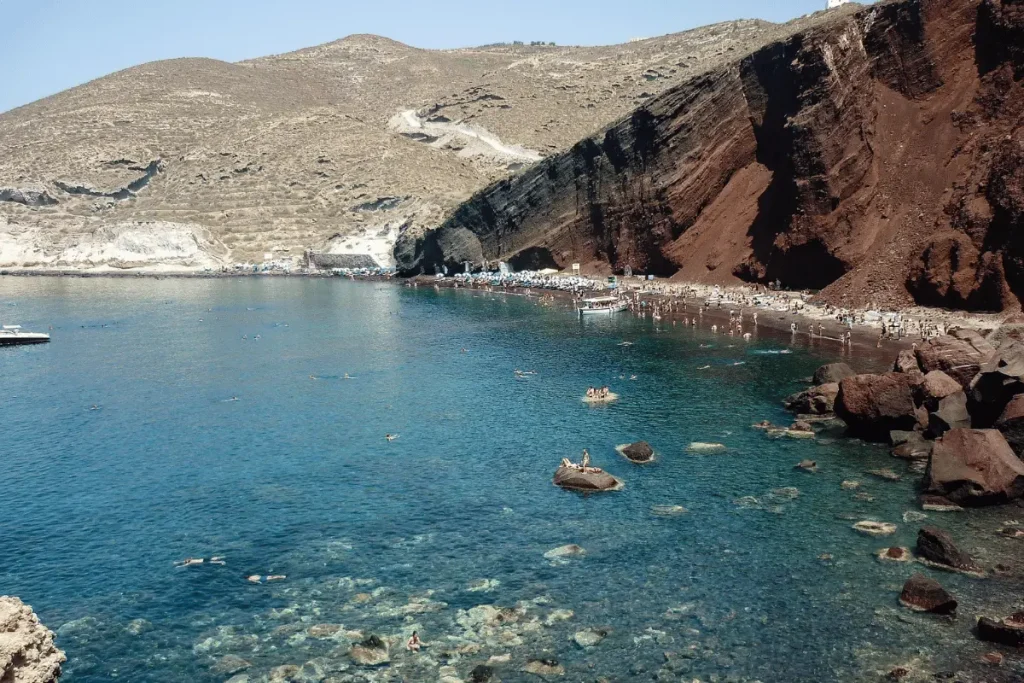
However, access can change because of rockfall and unstable volcanic cliffs. Check current local conditions before approaching the beach, and never ignore barriers or warning signs.
When direct access is restricted, the surrounding viewpoint can still offer impressive scenery, and boat trips can provide another perspective.
Best for: photography, scenery, geology, and short visits.
Time needed: About 1 hour.
Vlychada Beach
Vlychada is known for its sculpted volcanic cliffs and dramatic coastal landscape.
It feels quieter and more rugged than some of Santorini’s developed beach resorts and is a good choice for travelers who want scenery rather than a busy waterfront.
Public transportation can be more limited here, so plan your transport in advance.
Best for: dramatic landscapes, photography, and a quieter beach experience.
Time needed: 1–3 hours.
Best Historical Places to Visit in Santorini
Santorini has a remarkably deep archaeological history.
Its modern image is dominated by luxury accommodation, caldera views, and beaches, but the island has also been home to sophisticated prehistoric and ancient communities.
Ancient Akrotiri
Ancient Akrotiri is one of the most important historical places to visit in Santorini.
The prehistoric settlement was buried by volcanic material during the eruption of Thera, preserving buildings, streets, pottery, and other evidence of Bronze Age life.
The remains offer an unusually detailed view of a prehistoric urban settlement. The scale and preservation of the site help explain why Akrotiri is one of the most important archaeological sites in the Aegean.
A large roof protects the archaeological area, making it possible to explore the site even during the hottest part of the day.
Allow around 1.5–2 hours for your visit.
Ticket prices and opening arrangements can change by season. Check the official Hellenic Heritage e-ticket platform and the Greek Ministry of Culture before visiting.
You can easily combine Akrotiri with the Red Beach viewpoint, the Akrotiri lighthouse, Megalochori, or a nearby winery.
Best for: archaeology, history, culture, and families.
Museum of Prehistoric Thera
Located in Fira, the Museum of Prehistoric Thera provides important context for understanding Akrotiri and Santorini’s prehistoric history.
The museum contains archaeological finds from the island, including pottery, tools, sculptures, and wall paintings associated with Akrotiri.
It is particularly useful during very hot weather or when you want a cultural activity away from the beach.
A visit to the museum can also help you understand what you will later see at the Akrotiri archaeological site.
Best for: history, archaeology, culture, and midday sightseeing.
Ancient Thera
Ancient Thera sits on Mesa Vouno above the southeastern coast.
The archaeological site preserves remains from different periods of the island’s ancient history, including streets, religious structures, public buildings, and other evidence of life in the ancient city.
Because of its elevated location, a visit combines archaeology with broad views over the coast.
The site involves a climb, so it is more comfortable during the cooler part of the day.
Allow approximately 1.5–2 hours.
Best for: archaeology, history, active sightseeing, and panoramic views.
Best Natural and Scenic Places in Santorini
Santorini’s volcanic landscape is one of the main reasons the island feels so different from many other Greek destinations.
Santorini Caldera
The Santorini caldera is the defining landscape of the island.
The steep volcanic cliffs provide the setting for Oia, Fira, Imerovigli, and Firostefani, creating the dramatic backdrop seen in many of Santorini’s most famous photographs.
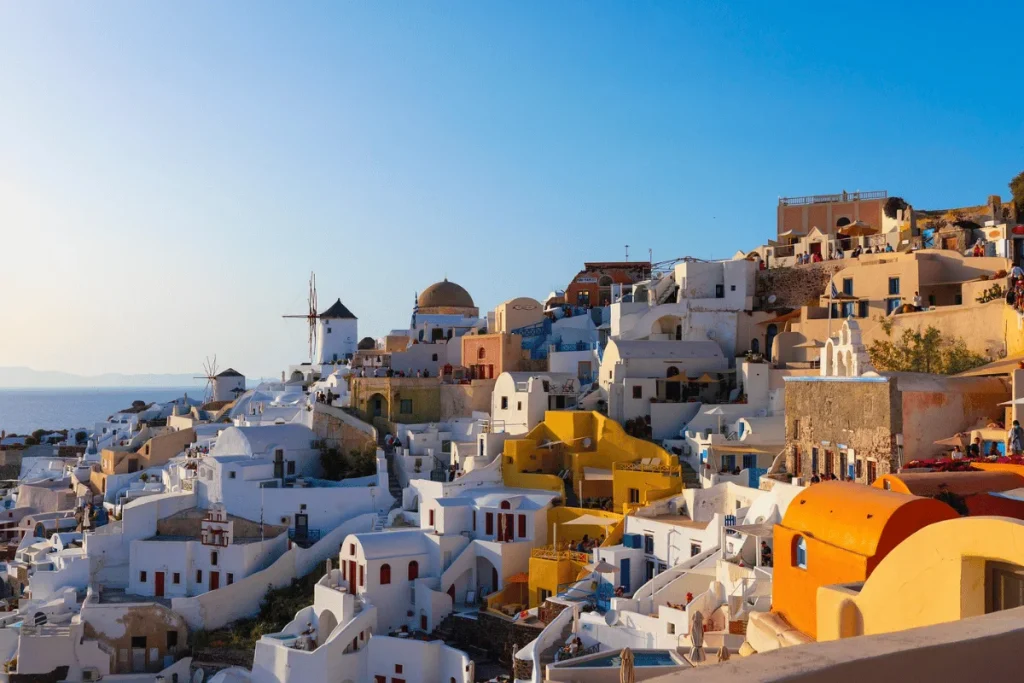
Instead of viewing the caldera from only one viewpoint, experience it from several villages. The perspective changes as you move between Fira, Imerovigli, Firostefani, and Oia.
Best for: scenery, photography, sunsets, walking, and first-time visitors.
Skaros Rock
Skaros Rock rises from the caldera near Imerovigli.
The area was historically associated with a medieval fortress, but today it is best known for its scenic walking route and views across the caldera.
The walk involves stairs and uneven surfaces, with some exposed sections.
Wear proper footwear, carry water, and consider visiting early or late in the day during summer.
Best for: hiking, viewpoints, photography, and outdoor travelers.
Ammoudi Bay
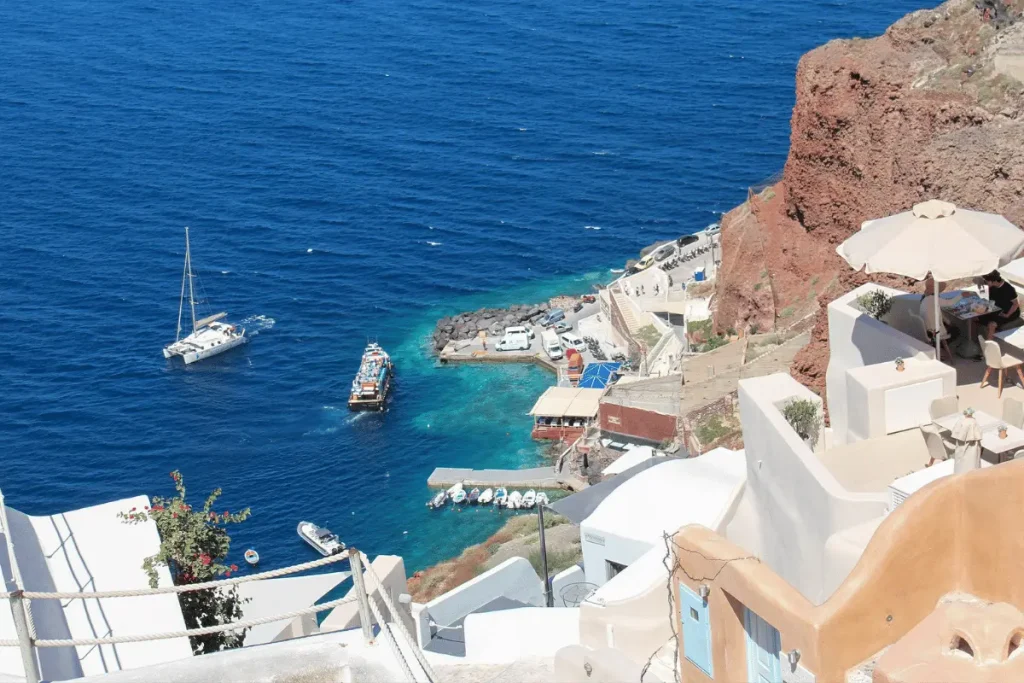
Ammoudi Bay lies below Oia and can be reached by descending the steps from the village.
The small harbor combines volcanic cliffs, blue water, restaurants, and a more relaxed coastal atmosphere than Oia itself.
Because returning to Oia involves climbing the stairs back up, plan your visit according to the heat and your energy level.
Ammoudi is particularly easy to combine with an Oia sightseeing day.
Best for: coastal scenery, seafood, photography, and combining with Oia.
Nea Kameni and the Santorini Volcano
A boat trip to Nea Kameni gives you a completely different perspective on Santorini.
Nea Kameni is the volcanic island located in the center of the caldera. Boat excursions can include a walk across the volcanic landscape and may also stop near the warm waters around Palea Kameni, depending on the itinerary.
Many volcano excursions depart from ports or coastal locations around Santorini and combine volcanic scenery with swimming or sightseeing.
Allow at least half a day for a typical excursion.
Wear comfortable closed shoes, carry water, and protect yourself from the sun.
Best for: volcano landscapes, geology, boat trips, swimming stops, and outdoor experiences.
Best Time to Visit Santorini
The best time to visit Santorini depends on your priorities.
Late spring and early autumn generally offer a good balance between warm weather, open services, and fewer crowds than the busiest summer months.
| Period | What to expect |
|---|---|
| Late April – early June | Warm and sunny, fewer crowds, sea can still be cool |
| July – August | Hottest, busiest and most expensive; heavy crowds in Oia and Fira |
| September – October | Warm sea, softer light, crowds begin to ease |
| November – March | Cooler and windier; many hotels, restaurants and tours reduce services or close |
For many travelers, late April to early June and September to October are practical periods for sightseeing and outdoor activities.
July and August are better suited to visitors who specifically want the height of summer and do not mind stronger heat and larger crowds.
Whenever you travel, book accommodation and popular tours early during the May–October period.
Where to Stay in Santorini
Where you stay can shape your Santorini trip as much as the attractions you visit.
The main decision is whether you want caldera views, beach access, transport convenience, nightlife, or a quieter atmosphere.
| Area | Best for | Advantages | Trade-offs |
|---|---|---|---|
| Fira | First-timers, transport, nightlife | Bus hub, restaurants, museums, caldera views | Busy, some noise |
| Firostefani | Quiet stays near Fira | Calm atmosphere, caldera path, walkable to Fira | Fewer services |
| Imerovigli | Couples, sunset views | Wide caldera views, quiet setting, Skaros Rock | Many stairs, fewer shops, premium prices |
| Oia | Iconic village experience | Classic Santorini scenery | Most crowded and expensive |
| Kamari / Perissa | Beach holidays, budget | Beaches, restaurants, lower prices | No caldera views, farther from Oia |
| Pyrgos / Megalochori | Traditional atmosphere, wine | Quiet and local feel | Car can be useful |
Best Areas for Caldera Views
The main caldera areas to consider are Oia, Imerovigli, Firostefani, and Fira.
Oia offers the famous village atmosphere and northern caldera views. Imerovigli tends to feel quieter while offering broad panoramas. Firostefani provides easy walking access to Fira, while Fira combines views with restaurants, museums, nightlife, and transportation.
Remember that caldera accommodation often involves stairs. You may also pay a premium for the view, so think about how much time you expect to spend at your accommodation before choosing the most expensive room category.
Best Areas for Beaches
For a beach-focused stay, look at Kamari, Perissa, and Perivolos.
These areas make sense when your priority is easy access to the sea, waterfront restaurants, and longer beach days.
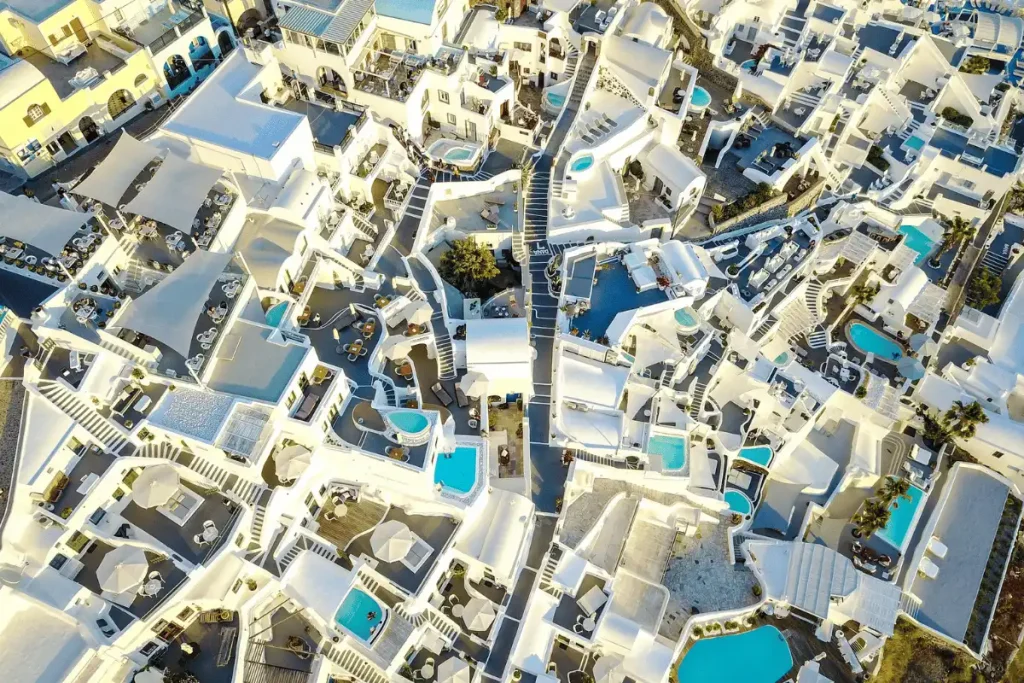
They also provide an alternative to the higher accommodation costs often associated with the caldera.
Kamari is particularly convenient and developed, while Perissa and Perivolos are useful for travelers who want to spend more time along the southern beach coast.
Best Areas for First-Time Visitors
There is no single area that works equally well for every first-time visitor.
Fira is practical for transportation, dining, museums, and exploring different parts of the island.
Firostefani is useful when you want a quieter setting within walking distance of Fira.
Imerovigli suits travelers who prioritize scenery and a calmer caldera atmosphere.
Oia is the choice for the classic Santorini village experience, sunset, and photography.
Kamari or Perissa make more sense when beach access matters more than caldera views.
Before booking, compare several areas rather than assuming the most famous village will automatically be the best base for your itinerary.
Santorini Itineraries: 1, 2 and 3 Days
The key to planning Santorini is grouping nearby attractions together.
Trying to cross the island repeatedly can turn a relaxing trip into a series of transfers.
Best Places to Visit in Santorini in 1 Day
With only one day, concentrate on the caldera.
Morning: Start in Fira and walk north through Firostefani toward Imerovigli.
Afternoon: Continue by bus or taxi toward Oia. Explore the village lanes, enjoy a late lunch or coffee, and explore before sunset.
Evening: Stay in Oia for sunset or return to Imerovigli if you prefer a quieter viewpoint, then have dinner.
This itinerary covers some of Santorini’s most iconic scenery, but it does not leave enough time for beaches, Akrotiri, traditional villages, and a volcano cruise.
Best Places to Visit in Santorini in 2 Days
Two days provide a much better balance between sightseeing and relaxation.
Day 1: Caldera
Fira → Firostefani → Imerovigli → Oia → sunset
Day 2: South and Beaches
Akrotiri → Megalochori or Pyrgos → Perissa, Perivolos, or Vlychada
Travelers interested in volcanic landscapes can replace part of the second day with a Nea Kameni boat trip.
This two-day itinerary gives you a mix of caldera scenery, villages, history, beaches, and volcanic landscapes without forcing you to rush.
Best Places to Visit in Santorini in 3 Days
Three days allow for more variety and a slower pace.
Day 1: Fira to Oia
Start early and walk the caldera route from Fira through Firostefani and Imerovigli toward Oia. Spend the evening in Oia and stay for sunset.
Day 2: History, Villages and Beach
Visit Akrotiri in the morning, then continue to Megalochori or Pyrgos. Add a winery experience before spending the afternoon at Perissa, Perivolos, or Vlychada.
Day 3: Volcano and a Flexible Afternoon
Take a Nea Kameni and hot-springs cruise, then spend the rest of the day at Pyrgos, Kamari, or another destination that you did not have time to see.
Another option is to visit Ancient Thera and combine it with Kamari.
Keep at least part of your final day flexible for swimming, a long lunch, or simply enjoying the caldera without another packed schedule.
How to Get Around Santorini
Santorini can be explored using buses, rental vehicles, taxis, transfers, and walking.
KTEL Buses
Public buses are useful for the main tourist routes, especially when starting from Fira.
The official KTEL Santorini network connects Fira with destinations including Oia, Kamari, Perissa, Akrotiri, Vlychada, the airport, and other areas.
Published fares can change, so check the official KTEL Santorini website before traveling.
Rental Car or Scooter
A rental car can be useful when exploring inland villages, wineries, southern beaches, and archaeological sites.
The advantages are flexibility and the ability to visit several destinations in one day, but parking can be limited in busy areas such as Oia and Fira.
Santorini also has narrow and sometimes steep roads, so drive carefully.
Scooters and other small vehicles require additional caution, particularly on uneven or busy roads.
Taxi and Private Transfers
Taxis and private transfers can be particularly useful when carrying luggage, arriving late, or visiting areas where public transportation is less convenient.
Because taxis can be limited during peak periods, advance arrangements can make arrival and departure easier.
Walking
Walking is one of the best ways to experience the caldera villages.
The trade-off is that the terrain includes hills, stairs, cobblestones, and uneven surfaces.
Carry water and wear comfortable shoes, particularly when walking the Fira-to-Oia route.
Planning your flights? See our Cheap Flights Worldwide guide.
Tours and Experiences Worth Booking in Santorini
Some Santorini experiences are particularly convenient to arrange in advance during busy travel periods.
Popular options include:
- Caldera sunset cruises
- Nea Kameni volcano and hot-spring excursions
- Private sailing trips
- Santorini wine-tasting tours
- Guided visits to Akrotiri
- Island sightseeing tours
A guided tour can save time when you only have one or two days and want to combine multiple destinations without organizing every transfer yourself.
A volcano and caldera excursion can also give you a perspective that is difficult to get from land.
Common Mistakes to Avoid in Santorini
Even a well-planned Santorini trip can become stressful if you try to do too much.
Trying to See Everything in One Day
Distances can look short on a map, but traffic, stairs, walking, and crowds can add significant time.
It is better to group destinations by area and leave enough space between major activities.
Visiting Oia Only at Sunset
Sunset is one of the busiest periods in Oia.
Visit in the morning as well if you want to explore the streets with fewer people and a different atmosphere.
Skipping Southern Santorini
The south offers a different side of the island.
Akrotiri, Megalochori, Pyrgos, Perissa, Vlychada, and other southern destinations show that Santorini is much more than its famous caldera villages.
Walking the Caldera in Midday Heat
The Fira-to-Oia route is exposed in places and involves hills and uneven terrain.
Starting early is much more comfortable, particularly in summer.
Assuming Red Beach Is Always Open
Access conditions can change because of rockfall risk.
Check locally before visiting and obey any closure signs or barriers.
Booking Too Late
Accommodation and popular tours can fill quickly during high season.
Early planning is especially useful if you want a specific location, sunset experience, or popular cruise.
Current Conditions to Check Before You Go
Travel conditions in Santorini can change because of weather, wind, ferry operations, access restrictions, and seasonal schedules.
The island also experienced an earthquake swarm in early 2025, while later sources described activity as having calmed and the island as open to visitors.
Before traveling, check current official travel advisories and local conditions, particularly if your plans depend on ferries, exposed hiking routes, archaeological sites, or coastal areas.
Heat waves, strong winds, and rockfall restrictions can also affect access and schedules.
FAQ: Best Places to Visit in Santorini
What is the best place to visit in Santorini?
It depends on your interests. Oia is known for caldera scenery and sunset, Fira combines views with museums, restaurants, nightlife, and transportation, Imerovigli offers quieter caldera scenery, Akrotiri is the key choice for prehistoric archaeology, and Perissa, Perivolos, and Kamari are good options for beach time.
How many days do you need in Santorini?
For the main highlights, 2–3 days is a practical amount of time.
Two days can cover the major caldera villages plus Akrotiri, a traditional village, and a beach. Three days allow more room for a volcano cruise, winery visit, hiking, swimming, and slower sightseeing.
Four or more days are better for travelers who want to explore at a relaxed pace.
Which area of Santorini is best for first-time visitors?
The main areas to consider are Fira, Firostefani, Imerovigli, and Oia.
Fira is convenient for transport, restaurants, museums, and day trips. Firostefani offers a quieter location close to Fira. Imerovigli provides wide caldera views with a calmer atmosphere. Oia offers the classic Santorini setting and famous sunset experience.
Is Oia or Fira better to visit?
Both are worth visiting because they offer different experiences.
Oia is centered on iconic architecture, caldera scenery, photography, and sunset atmosphere. Fira is more practical, with museums, restaurants, nightlife, services, and transportation connections.
Are Santorini beaches sandy?
Santorini’s beaches are mainly volcanic.
Expect black sand, dark pebbles, red cliffs, and other volcanic formations rather than the pale soft sand found on many Greek islands.
Dark sand can become extremely hot during the summer, so beach shoes are useful.
Is Akrotiri worth visiting?
Akrotiri is particularly worthwhile for travelers interested in history and archaeology.
The prehistoric settlement was buried by volcanic material, preserving buildings, streets, pottery, and other evidence of Bronze Age life in the Aegean.
Allow approximately 1.5–2 hours for a visit and check current ticket information before you go.
Do you need a car in Santorini?
Not necessarily.
The main caldera villages can be visited using buses and walking, especially when starting in Fira.
A car becomes more useful for wineries, inland villages, southern beaches, and archaeological sites when you want greater flexibility.
Is Red Beach open?
Access to Red Beach can change because of rockfall risk and the condition of the volcanic cliffs.
Always check local conditions before visiting. If direct access is restricted, use the designated viewpoint or consider seeing the area from a boat.
Never ignore barriers or warning signs.
How do you get from Fira to Oia?
You can travel by KTEL bus, taxi, or on foot.
The walking route along the caldera is about 10.5 km one way and commonly takes around 3–5 hours when you include stops for water and photographs.
What is the best time to visit Santorini?
Late April to early June and September to October offer a useful balance of warm weather and fewer crowds than July and August.
July and August bring the busiest conditions and hottest temperatures, while November through March is quieter but many businesses reduce their hours or close seasonally.
Final Thoughts: How to Choose the Best Places to Visit in Santorini
The best places to visit in Santorini go far beyond the famous blue-domed streets of Oia.
A well-balanced trip combines the caldera villages of Oia, Fira, Imerovigli, and Firostefani with traditional settlements such as Pyrgos, Megalochori, and Emporio.
Add one or two volcanic beaches such as Perissa, Perivolos, Kamari, Red Beach, or Vlychada, then make time for the island’s deeper history at Akrotiri, Ancient Thera, or the Museum of Prehistoric Thera.
For a different perspective, walk toward Skaros Rock, visit Ammoudi Bay, or take a boat trip to Nea Kameni and the caldera.
The most important planning rule is simple: do not try to fit every attraction into a single itinerary.
With one day, focus on the caldera. With two days, add the south, history, and a beach. With three days or more, you can include a volcano cruise, winery experience, hiking, and slower sightseeing.
Santorini is at its best when you allow enough time to appreciate the scenery rather than rushing from one famous viewpoint to the next.
For more destinations across the country, continue with our Greece Travel Guide.
For budget planning, see How to Travel on a Budget.
For flight planning, visit Cheap Flights Worldwide.
Official Sources
Visit Greece — Santorini Beaches
Visit Greece — Santorini Volcano
Greek Ministry of Culture — Museum of Prehistoric Thera